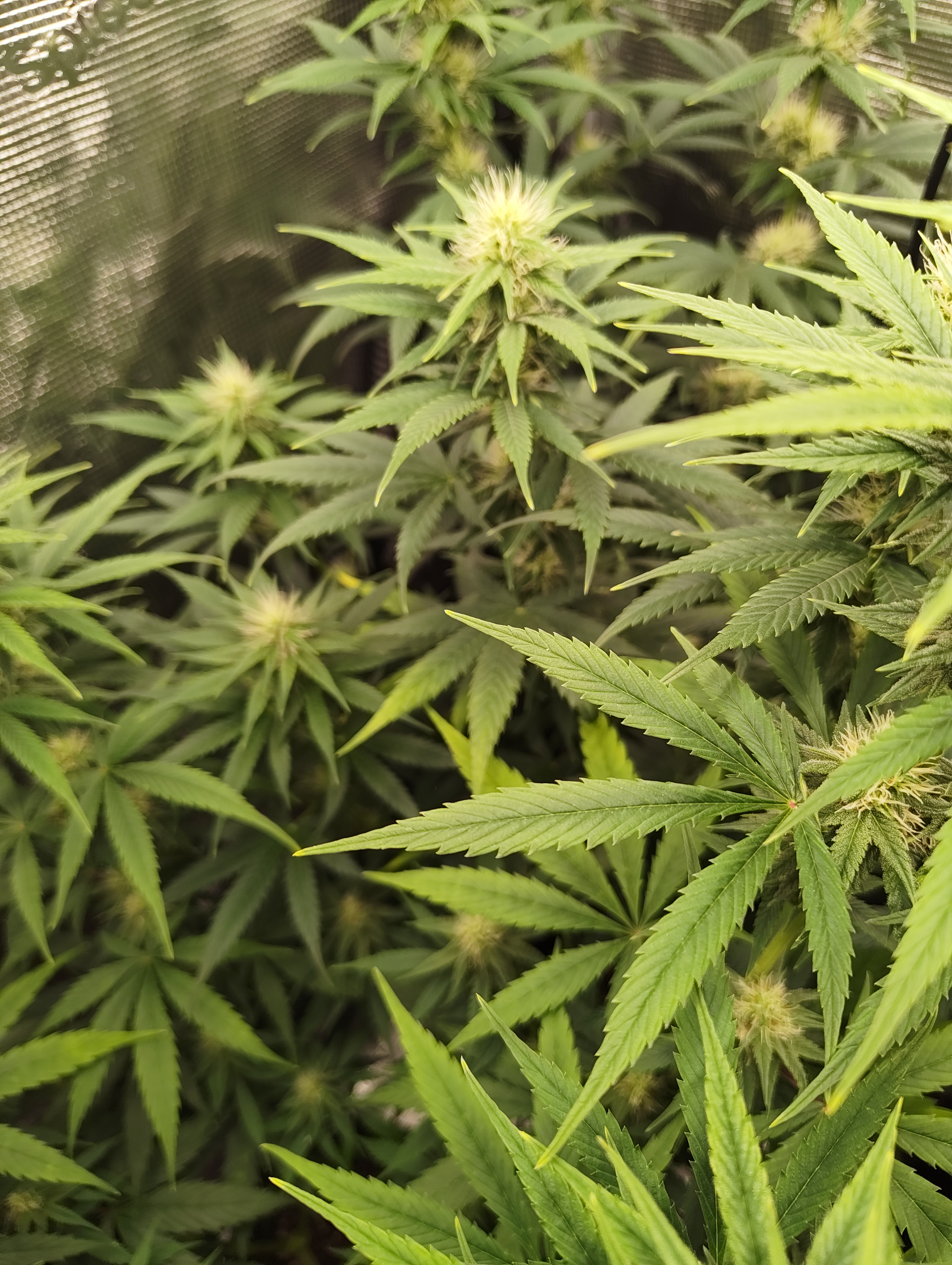
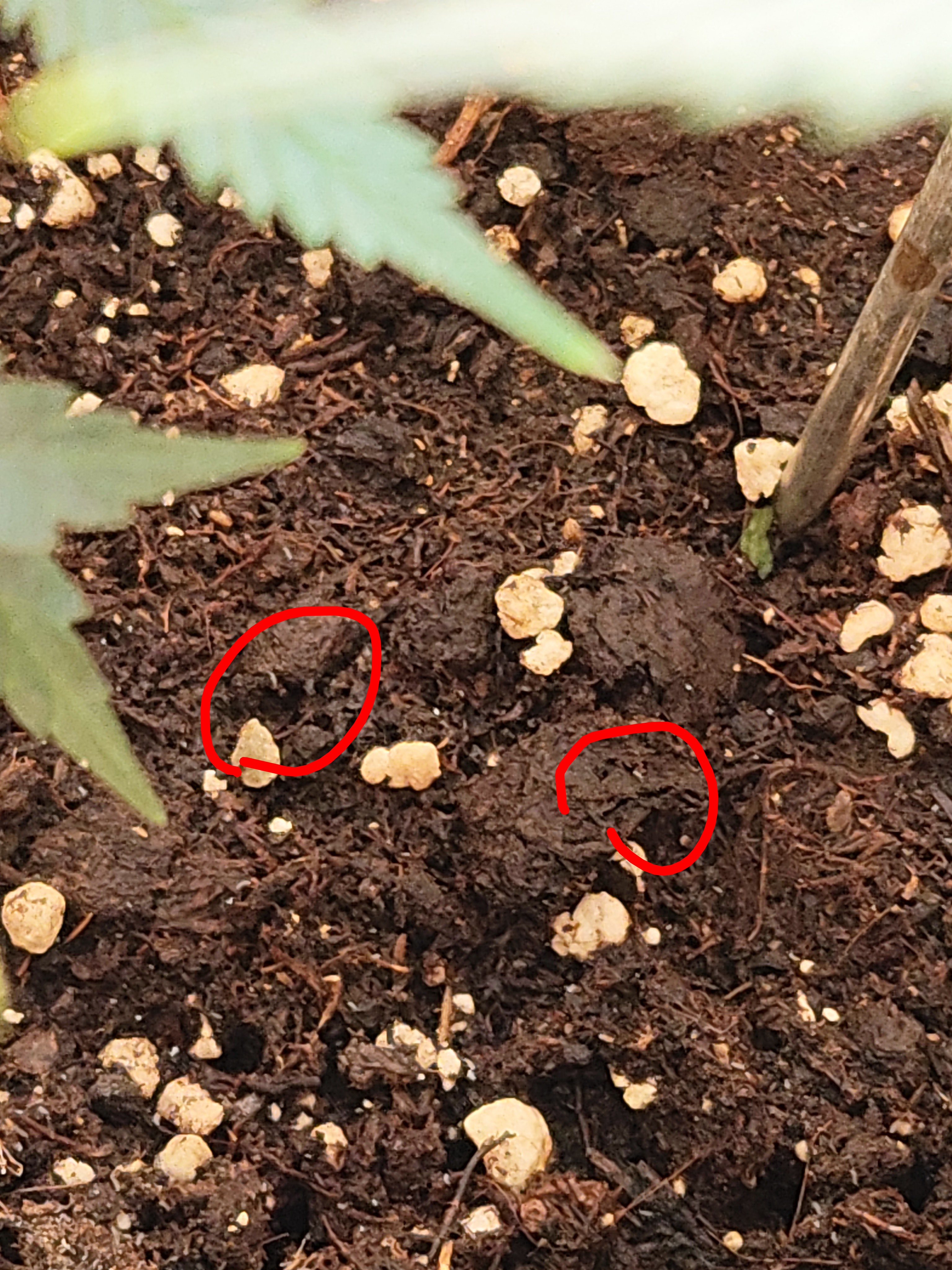
Calmag with Greenhouse feeding during flowering?

Hey @Andi_M8
first of all, welcome to our community, and let’s quickly get to your first post concerning CalMag problems.
CalMag deficiency can arise from irrigation water if there is too little Calcium / Magnesium in it. However, even if there is enough in the soil, other factors play a role in whether a deficiency occurs or not. Even a microclimate directly around the plants can trigger this deficiency. Here, it should be tested whether it helps to slightly increase the temperature and/or lower the humidity.
CalMag deficiency does not only appear in the third flowering week!
It usually already exists during the vegetative phase and manifests itself through tiny brown spots on the foliage, and especially then, one should do something about it, because - if it slips into flowering, there is usually nothing left to fix with this deficiency. Yield losses can then be the consequence.
It becomes very noticeable during the flowering period because generally now, i.e., in the first 4 flowering weeks / stretch phase, the plant needs a lot of nutrients.

Now you are working with Greenhouse Feeding.
I know it, but I haven’t worked with it myself yet.
In principle, it’s like Living Soil, Bio Tabs, meaning a purely organic matter where plants are nourished specifically by fungi and bacteria in the soil.

With that, there should actually already be enough Calcium Magnesium in the soil.
If the ambient air temperature drops too low during the dark period, this can restrict the activity of beneficial soil organisms, which can then lead to such problems.
Let’s make sure that the temperature doesn’t drop below 22 degrees during the dark period.
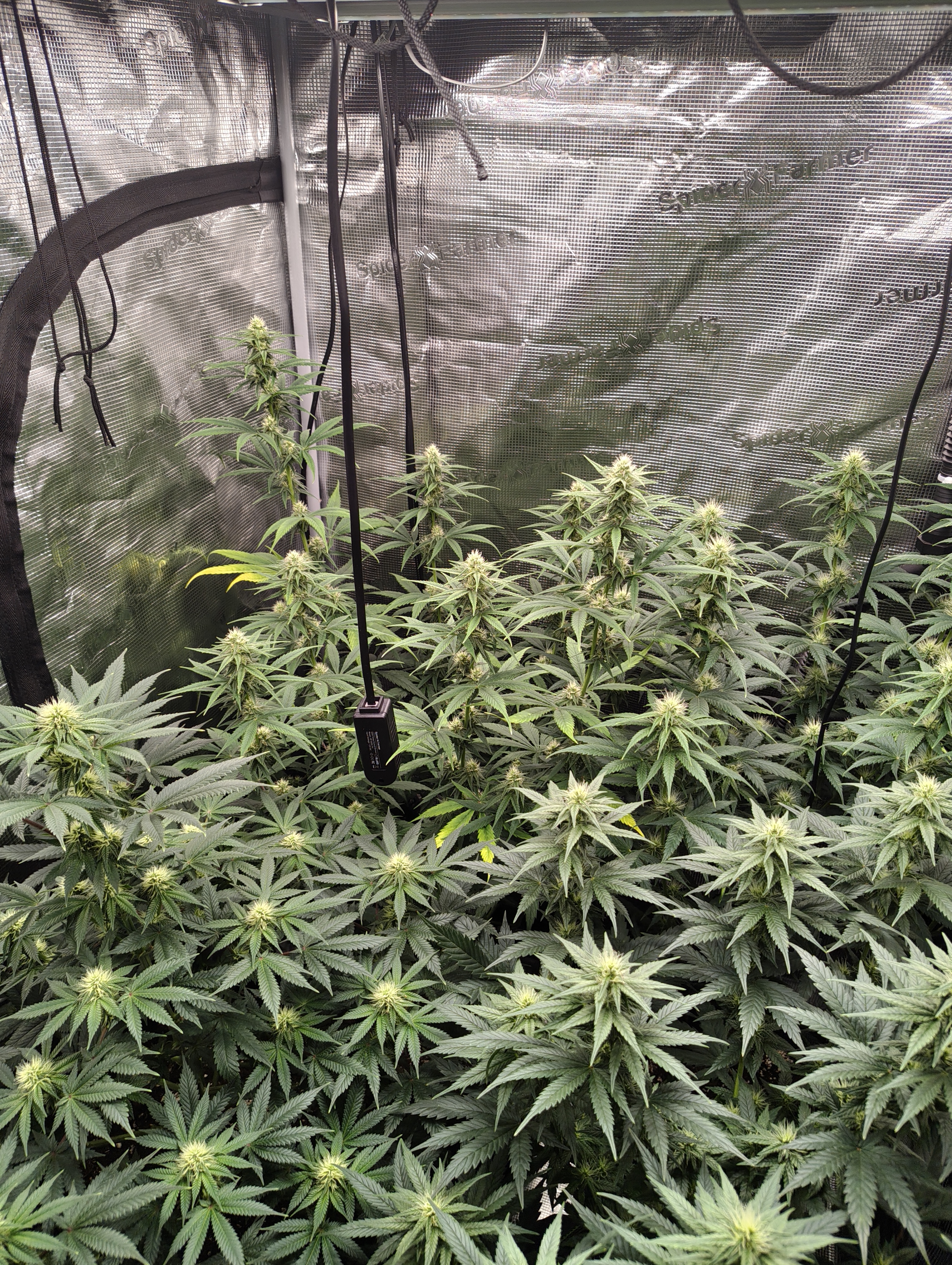
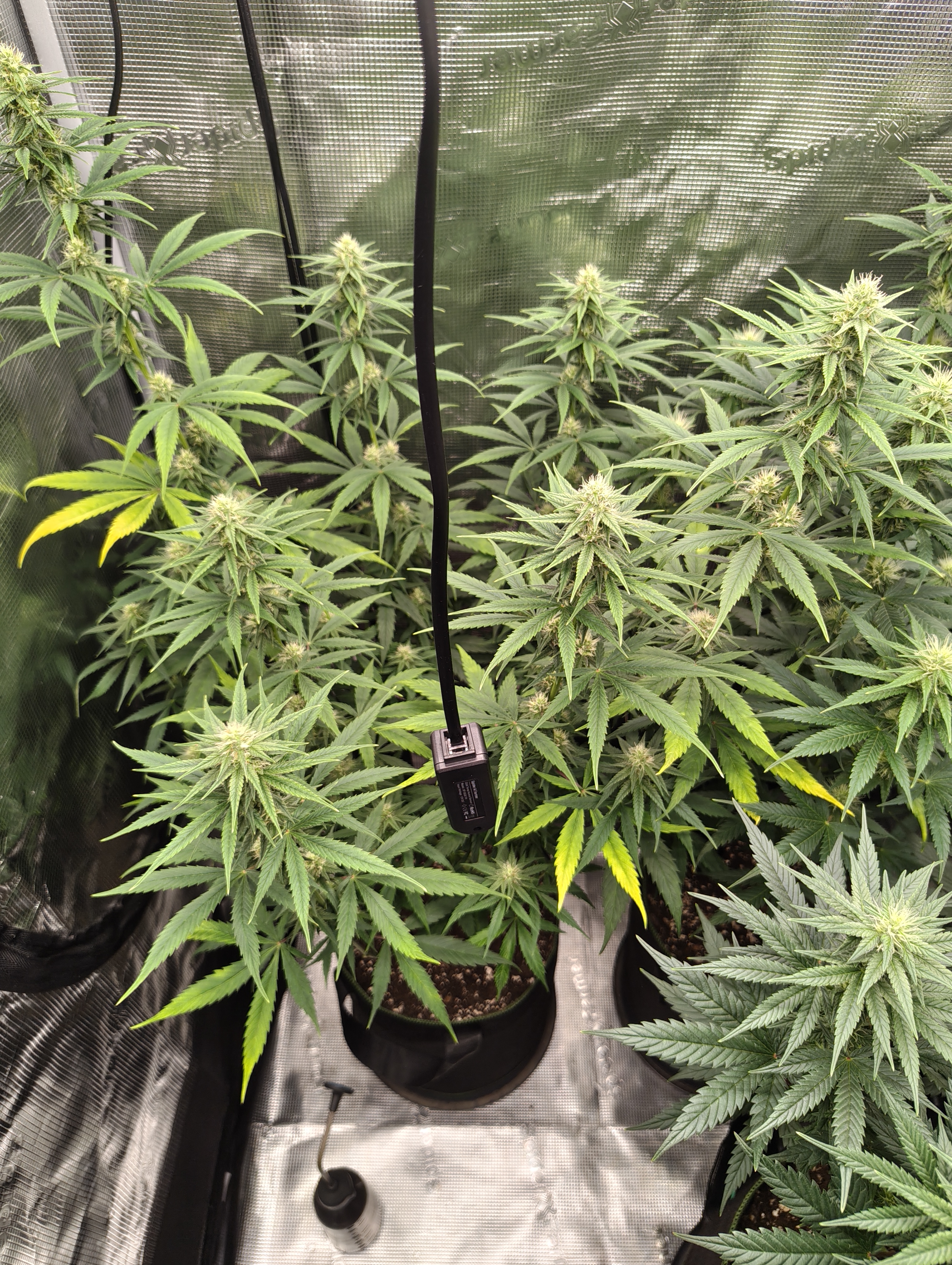
A minimal CalMag deficiency can be seen in your first picture.
But so slight that I wouldn’t worry about it.
In your post to @herr_gruen from 3 hours ago, your plants look " TOP ".
Many would be licking their fingers at that. :rofl:

It is possible to add some Dolomite lime to get even more Calcium/Magnesium into the soil.
Since you are working organically, I recommend the Dolomite lime from Bio2Grow!
Also purely organic, and at the beginning of the soil mix, simply mix in 0.5 to 1 gram per liter of soil. This means for a 20-liter pot, 10 to 20 grams, and no more. Lime can change the pH, so handle it gently.
It breaks down slowly over weeks and months, thus providing an extra portion of the desired substances.
With many liquid CalMag products, it can happen that soil life can be disturbed, weakened, or completely brought to a halt. Especially with mineral substances.
Especially with CalMag deficiency, it is better to work preventatively to avoid getting it in the first place. And as mentioned, if it’s already in flowering, there’s nothing more to be done.
And that’s how it is!
The quantities I mentioned to you are manufacturer specifications, which are always a bit higher anyway, and therefore it doesn’t hurt to always stay a bit lower than what is written.
To get the correct lime amount for the soil, a soil analysis would have to be done to determine the exact lime value.
I transferred the quantities to you from my Dolomite lime bag. It says so on the back.
In any case, your current grow will be a very good grow!
I think this helps you further, and I have to get back to my duties now. Have a nice evening, wishes Pflanzenpaule

5 Likes

I use “ionic” cal-mag and I use it in ALL waterings without fail. At my grow, I was advised when I switched to LEDs that they consumed a lot of cal-mag. I’m also in the 3rd week of flowering, and so far I’ve added cal-mag in all waterings and none of the 3 varieties have shown deficiencies or excesses. In my case, I use 0.5ml per 1L, with well-adjusted PH, and even though my city’s water is hard and already contains calcium and magnesium, it comes out of the tap at almost 700EC. I also use Topcrop organic.

As a side note, in case you didn’t know, cal-mag reacts with the phosphorus in the fertilizer, converting it into calcium phosphate, which is insoluble in water.

With this, I want to tell you to be careful not to mix them. Separate the waterings so as not to use them at the same time, or dilute one of the two completely in water until it’s fully incorporated, and then add the other. If they are mixed in their concentrated form, calcium phosphate is formed.

3 Likes

You should generally not mix the fertilizers with each other and always add them to the water one after another.

4 Likes

I don’t need to say much more about that.
Good old @Pflanzenpaul wrote a nice report there.
I usually mix my soil in a 90l mortar tub. I already add dolomite to it, more or less by eye, like when cooking. A pinch of this, a little of that.
I’m getting sidetracked.

otherwise, as Paul said, directly into the soil in the pot.

Oh yes.
The inner know-it-all asks if dolomite, being from the mountains, isn’t always organic?
Greetings and good luck
:four_leaf_clover:

3 Likes

What is also always helpful in my experience is to directly work in lawn lime at the beginning; if you need quick results, then dissolve eggshells with some citric acid (eggshells from 2 eggs, max 1/2 teaspoon of 25% citric acid), then dilute that with 1.5l of water and you can water it.

Lawn lime can also still be worked in now.

Happy Growin🥦

3 Likes

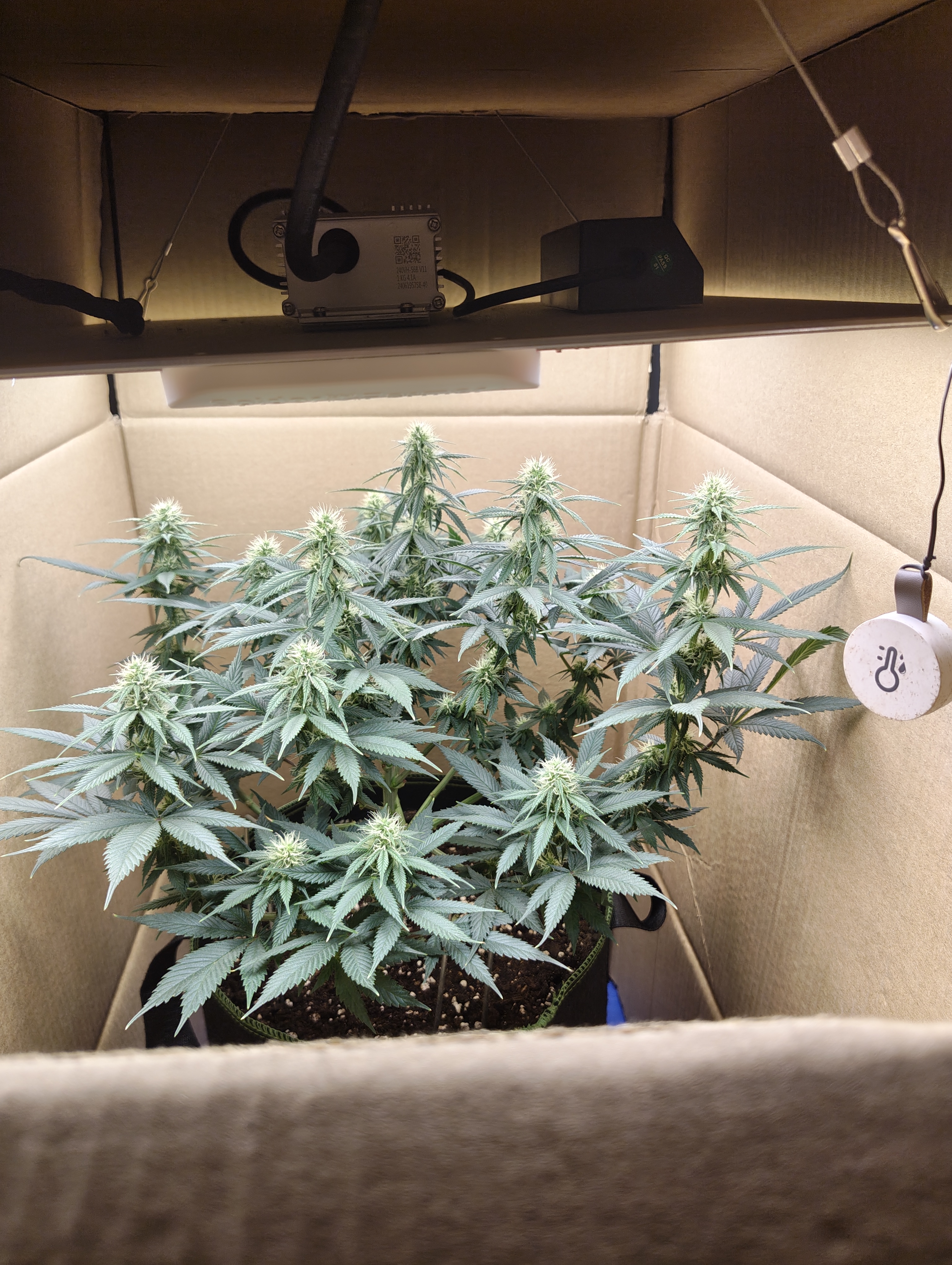
Pflanzenpaul. First of all, thank you very much, and I read through that thoroughly, which was quite a bit, but awesome and informative. Super cool :winking_face_with_tongue:. Current daytime temperature is 24-25. Night temperature at 20 (thought 18 would be better because at night). Luckily, the deficiency has always only appeared for me in flowering week 3. I also looked at the water values,

3 Likes

I could only answer now. Because I am new here.

2 Likes

》Like with cooking…..《 hehe, as a chef, I find that a super cool comparison….recipes are good but the pinch of personal initiative gives the whole thing a touch of personal extravagance🫡

3 Likes

Hey @Andi_M8
A lot of input and a flood of information, which just develops over time.
Sometimes it doesn’t come, and sometimes it does.
That’s simply because every plant behaves differently. Some need more, and others less.
And that’s why one has it and the other doesn’t!
But you’re definitely on the right track somewhere. Because you’ve examined your water values.
I haven’t done that yet! :joy:
But if your values are really like that, your CalMag problem doesn’t surprise me.
If I’m on the right track, the calcium should actually be much higher, and with you, it’s the other way around. And that causes the problems. A calcium-only supplement or just some liming should work wonders.
Your night temperature of 20 degrees is OK and can go down to 18 degrees at night in the last three weeks of flowering.
Your daytime temperature is a bit low, which would also be optimal in the last three weeks of flowering, and until then, I would gently raise the temperature to 26 / 27 degrees, which is even more beneficial for soil life.
And if you often only see a very slight CalMag deficiency starting from the third week of flowering, they will still finish. Because at some point in flowering, in the last two or three weeks, they will use themselves up anyway. Nature, after all.
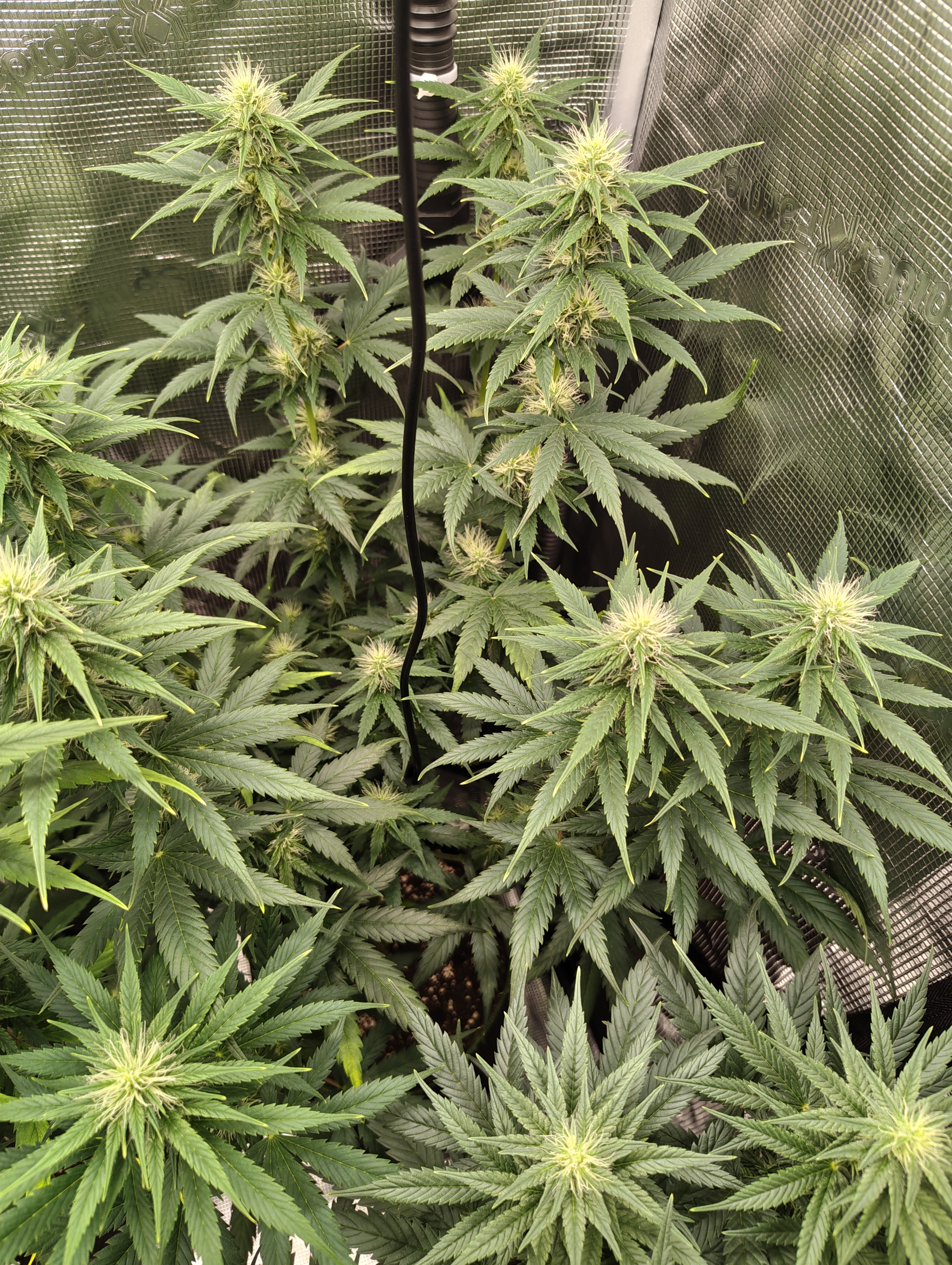
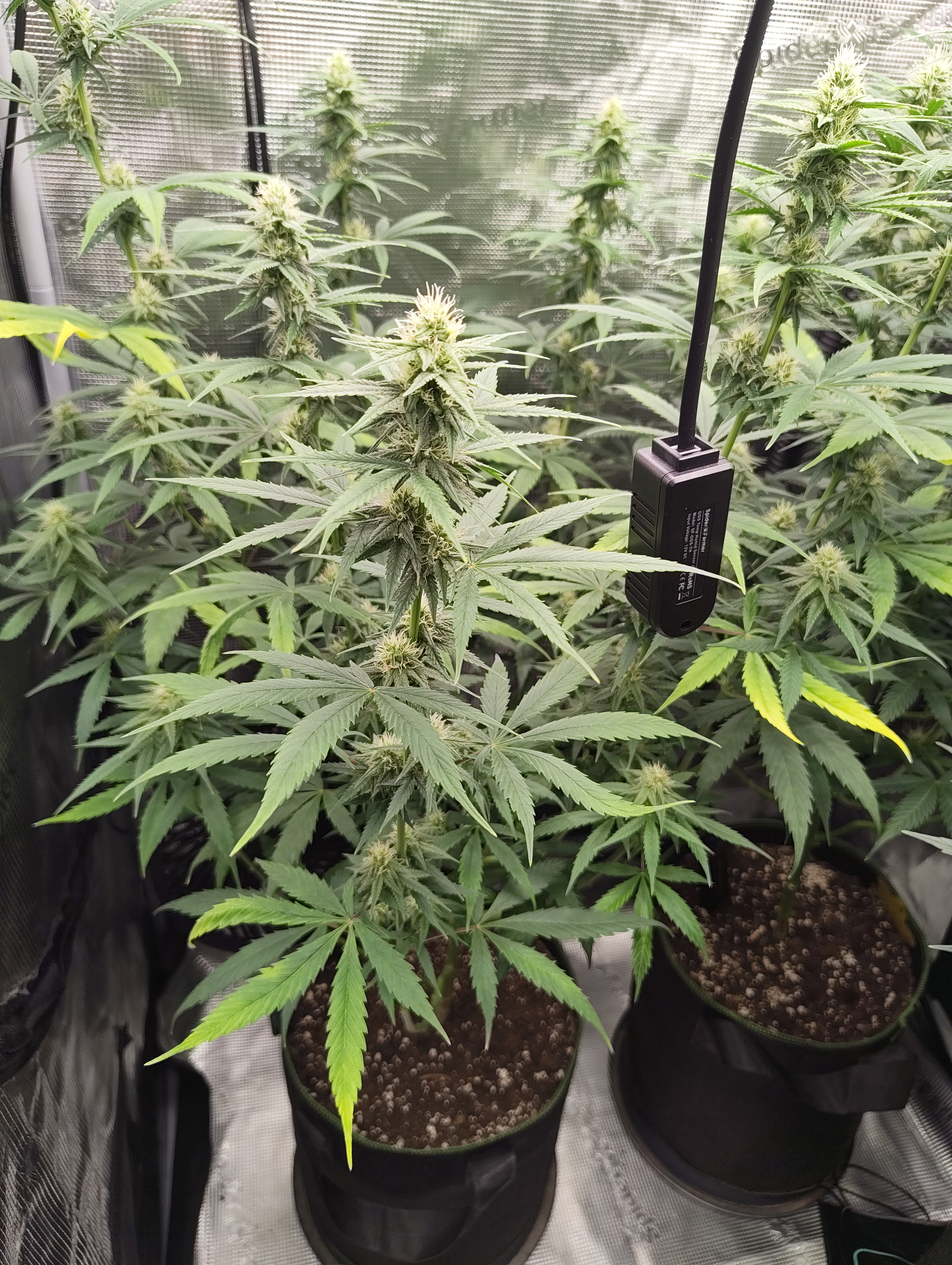
From the pictures, you are already very well on track.
In any case, make sure more calcium gets into the soil or water, and then things will run even better. Greetings from Pflanzenpaule

4 Likes

Thanks for everything. Post in a few days how they are doing with pictures of course.

4 Likes

Today the dolomite lime arrives, then I’ll put a little bit on that one.

4 Likes

Lollipoping is finally happening tomorrow :winking_face_with_tongue:

3 Likes

New Images

3 Likes

Is there a special reason why that one is in solitary, or just for space reasons? Your plants definitely look very good.

3 Likes

Exactly, the space was not enough.

3 Likes

I discovered a problem today. Small larva-like creatures. Maybe that’s related to the two plants in the back left and right that aren’t looking so good. SF nematodes?

1 Like

1 Like

trying to photograph the critters. They are everywhere

2 Likes

Naturally, the one in the box is crawling the most.

2 Likes

SF Nematodes should help. I had the same problem with a plant last year and got rid of them with the nematodes.

3 Likes