Appearance

Hello everyone, a question…

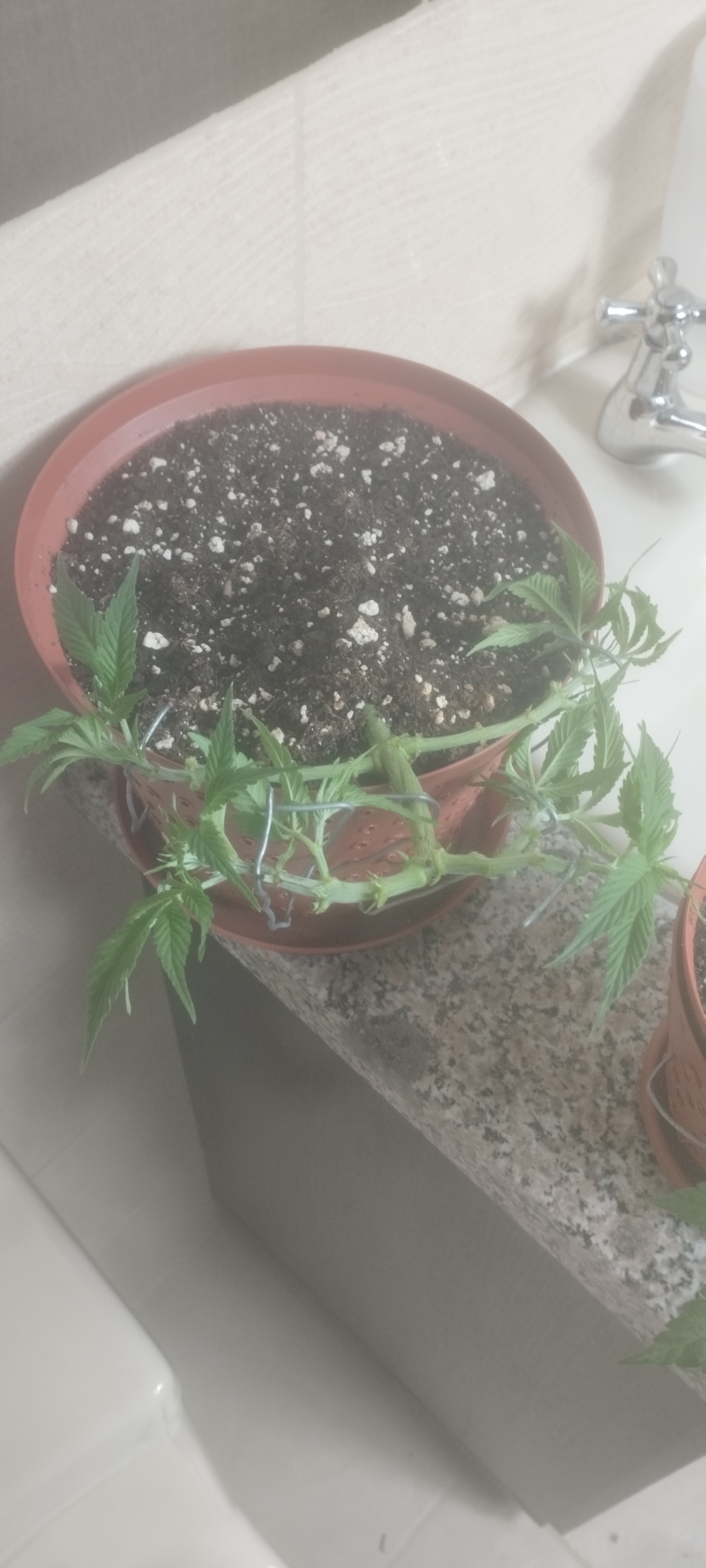
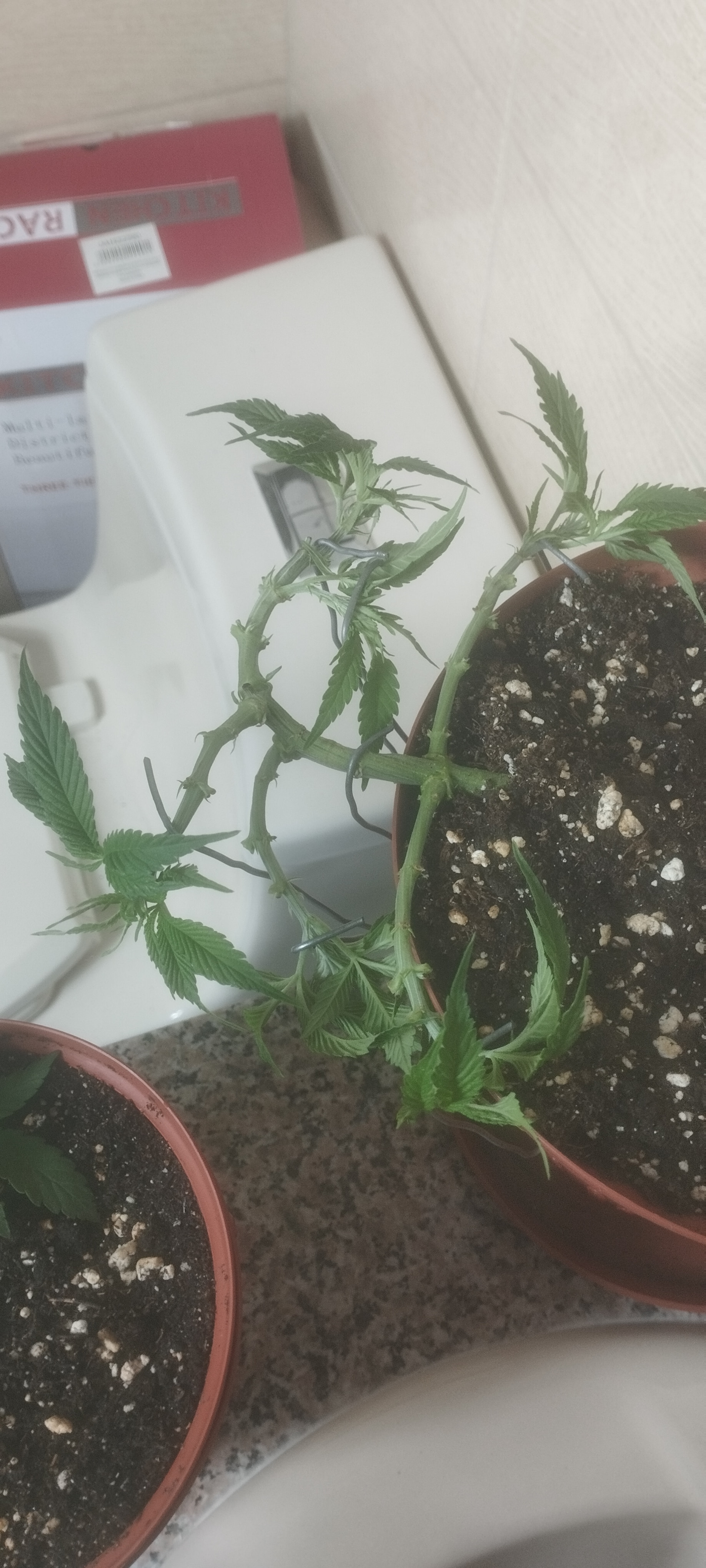
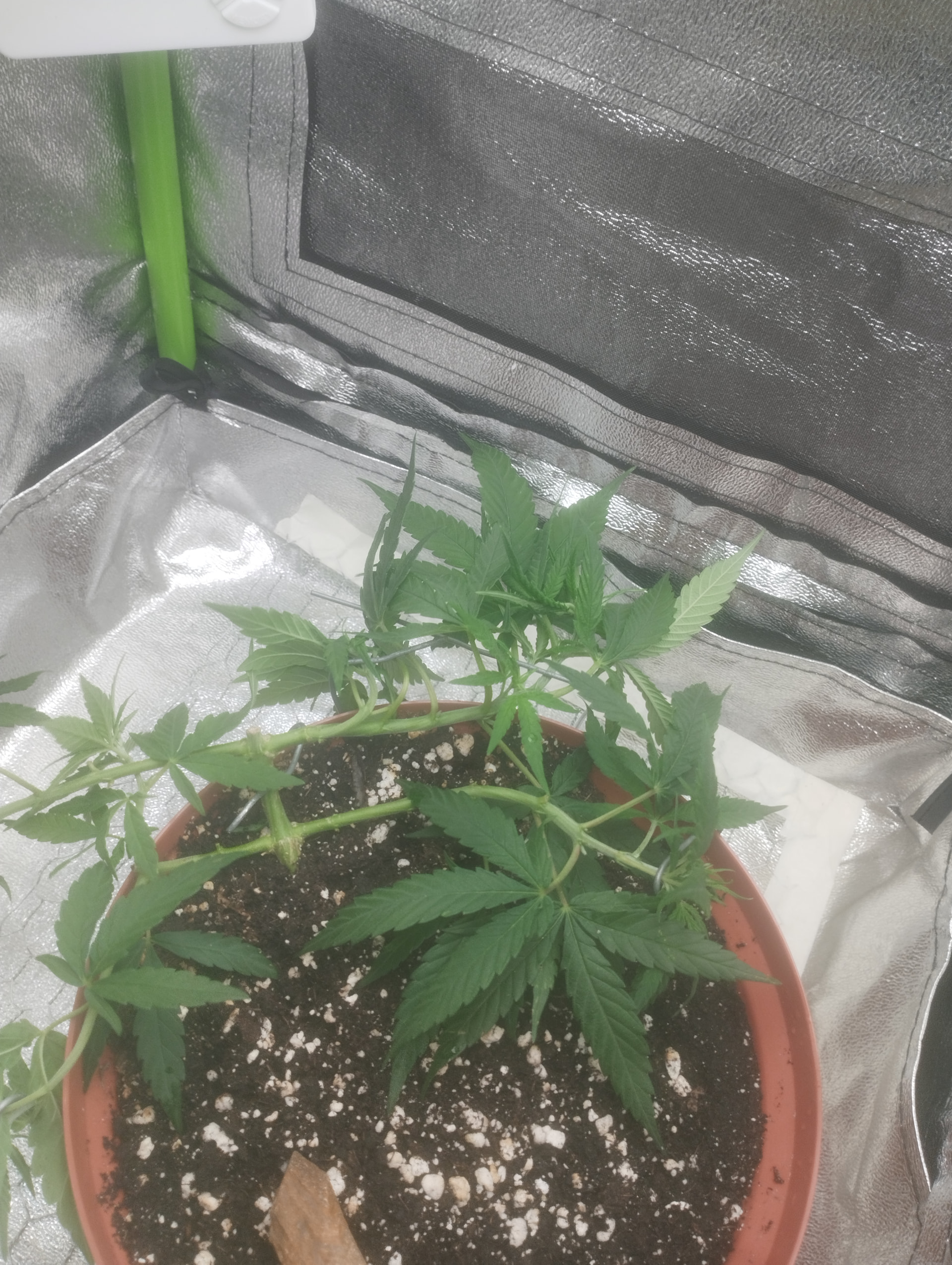
Could you please help me with your opinions on the state of the plants? I performed an aggressive defoliation… and it’s difficult to detect anything when you only leave the shoots with leaves. I’m leaving you some pictures before and after the pruning. Regards, everyone!
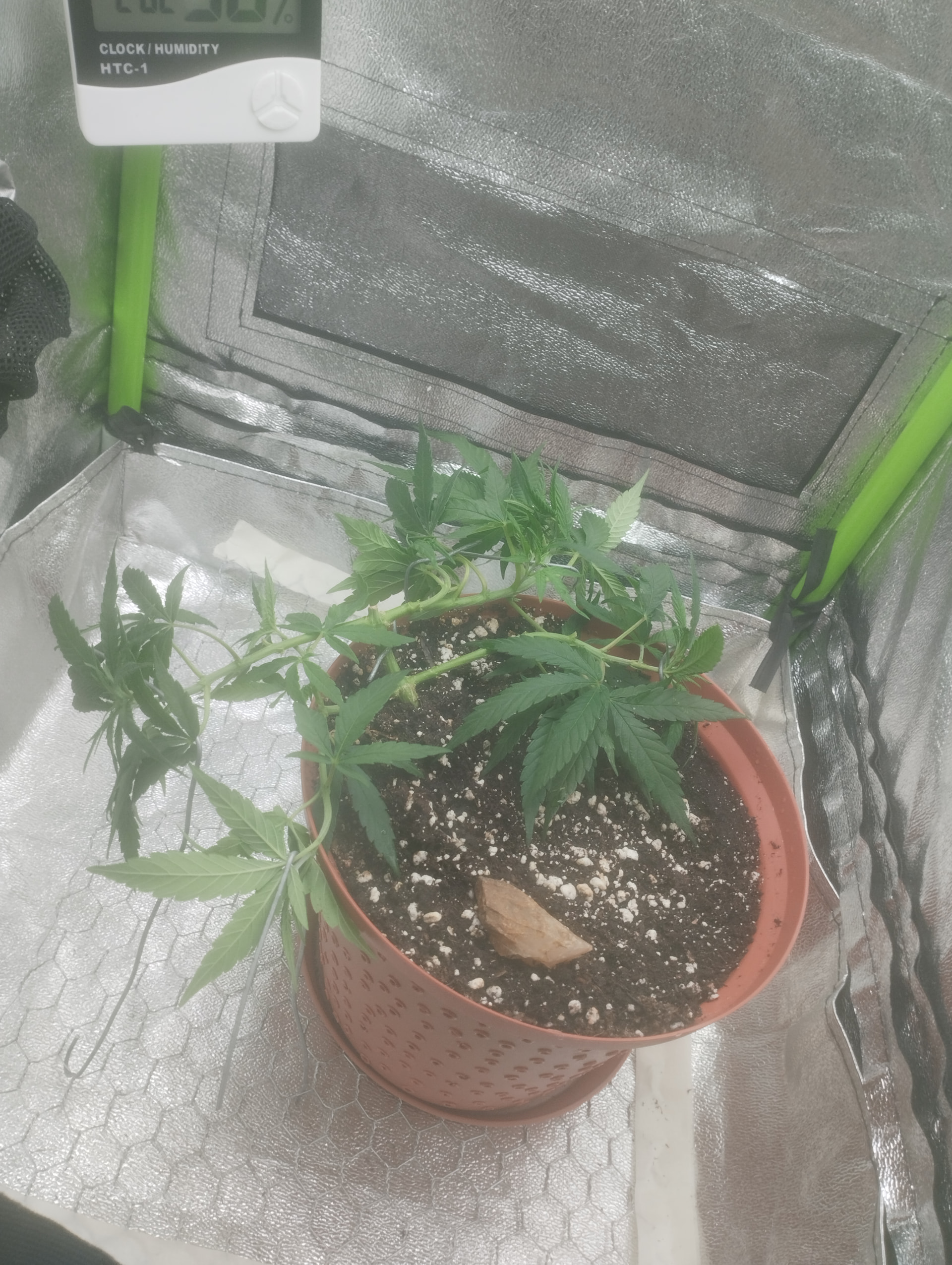

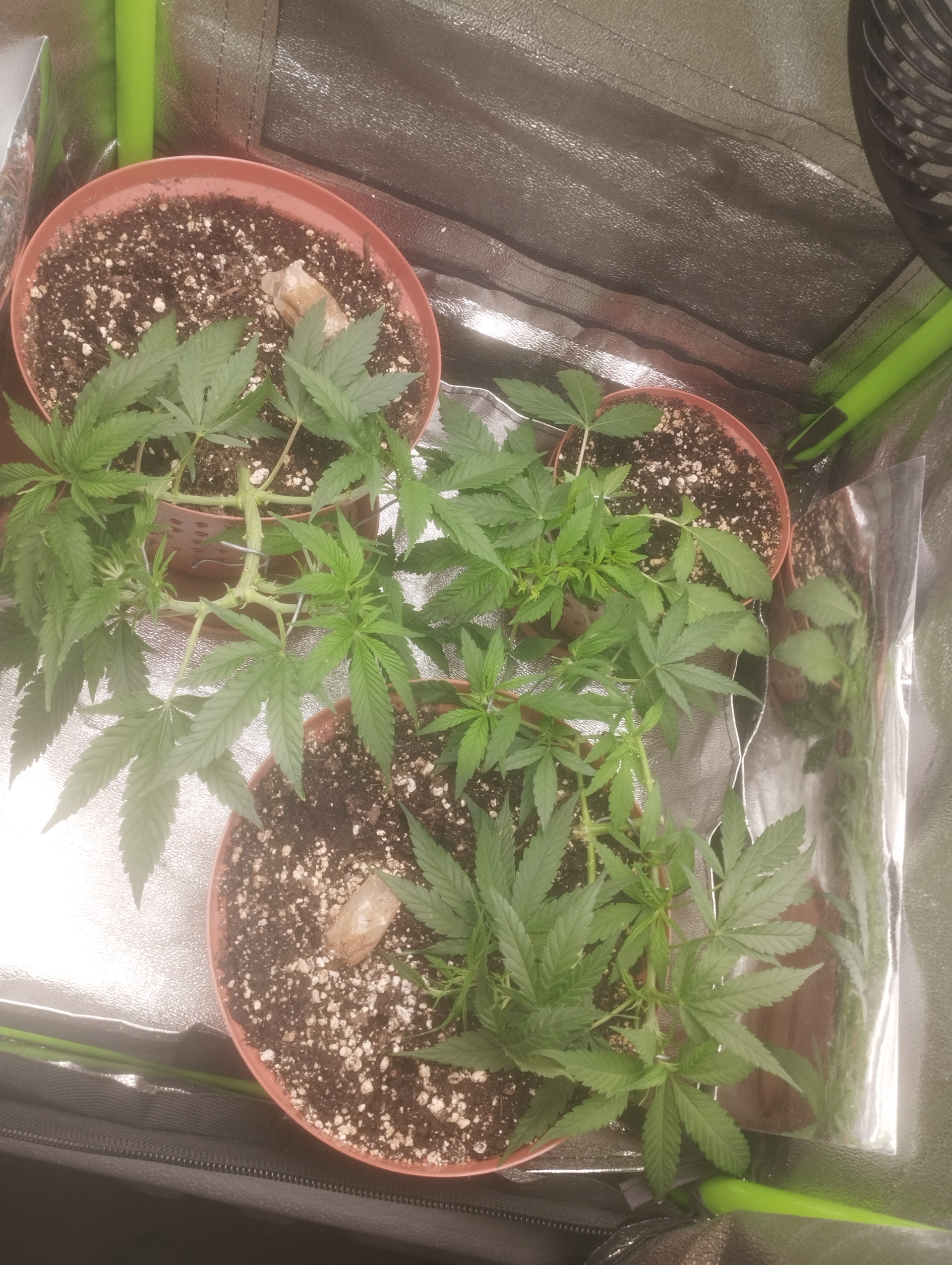
IMG_20260219_085003

For now, these are the numbers I follow:

PH 5.75-5.95
EC 750-850
TEMP 21.4-23.1 Day
TEMP 20.0-21.0 Night

(the cold is intense, between 15-16 degrees outside, the LED helps with the heat… in a good way, and keeps those numbers stable… Not so optimistic but stable…

Drainage water with a pH of 7.6-7.9
an EC of 1450

Excess salts, thanks to prompt observation, no deficiencies or excesses were present for the most part… A couple of tiny tips were affected by the excess; thanks to the lockout, they didn’t burn…

Once detected, a root flush was performed, and these were the results, and the drainage water after the flush showed these numbers:

PH 6.55-6.43
EC 920-950

And we proceeded with waiting for the root flush shock… And we continued with Bio Bizz fertilizers in amounts of 1ml of grow) 650 EC
3ml of root )
0.5ml of PH up 50 EC
0.5g of magnesium 202 EC

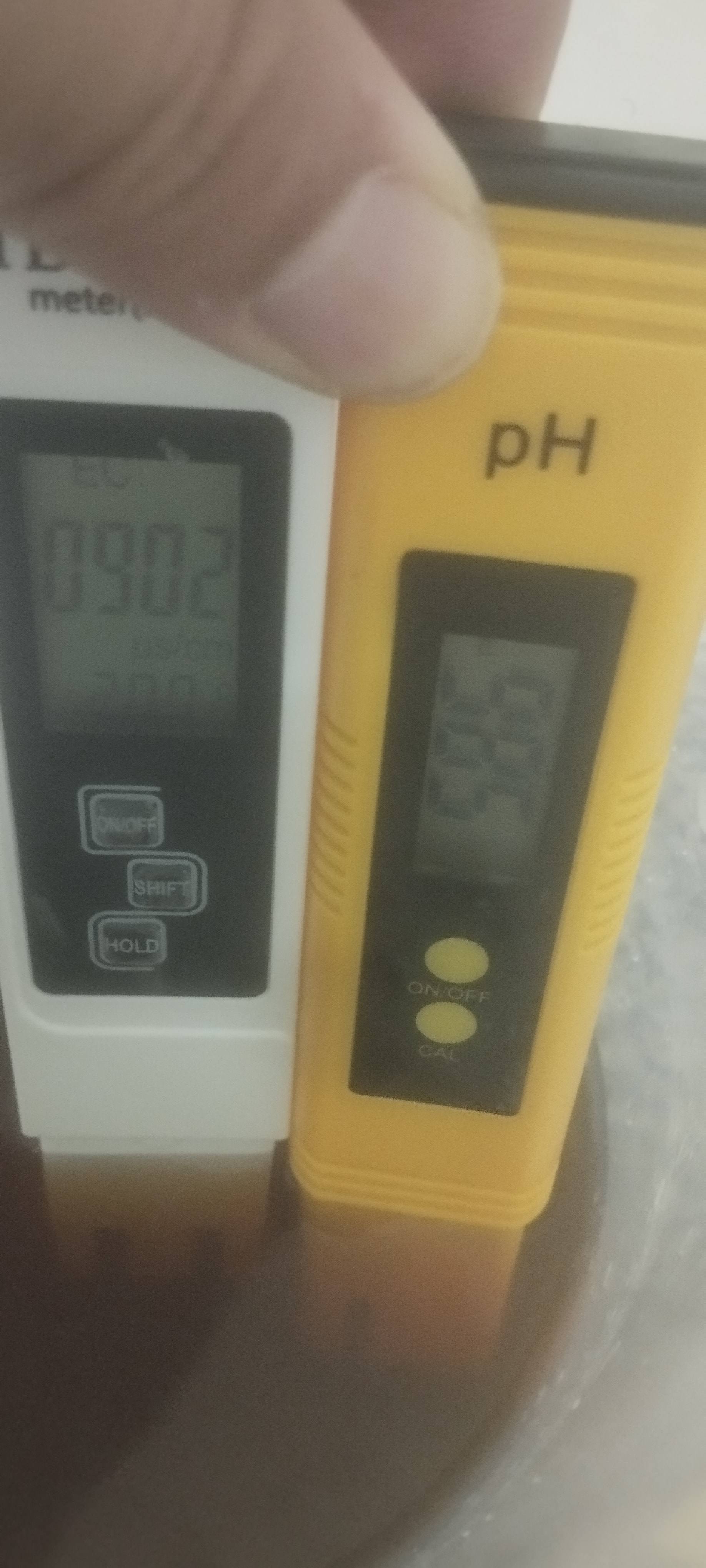
A total of 902 EC with a PH of 5.83
I was lucky because it was the first time using pH up powdered magnesium to dilute, and well, everything went very well, the numbers look good… I await your comments and opinions
Thank you, everyone :collision::maple_leaf::heart::revolving_hearts:

3 Likes

The plants look good and the defoliation was also done neatly. What I particularly like are the ventilation holes you added to your pots, I do that too. This way you prevent root circling, and since you’ve done a root flush, the soil will be able to dry out well. For the next 2 waterings, I would reduce the amount of water a bit, as they are now evaporating less water. Otherwise, you’re doing everything right so far.

5 Likes

Thanks friend sir. Your comments are appreciated…:folded_hands::maple_leaf::heart:

4 Likes

I’m not too familiar with biobizz but I believe it’s an organic ammendment. Flushing doesn’t do much for organics. Also pH doesn’t matter in organics as the roots change the pH near the roots to take up what they need as they need it. I run organics and don’t adjust my pH at all, it’s straight from the tap with a pH of almost 9. I do use a filter to take out the chlorine though. I’ve never experienced a lockout or excessive nutrient uptake in the years I’ve been doing this. I will say though I’m not familiar with biobizz, it may not be a true organic ammendment like Gia green isn’t and those do come with pH issues and lockout.

4 Likes

Mmm, how strange.
Why do they show burnt tips, similar to excess salts or minerals,
And a strong and pronounced yellowing in the center of each cola or apex?
So, when I measured the runoff water, it had pH percentages of 7.6-7.8 and an EC of 1450.
I assumed it

2 Likes

@Tolitos
Take a closer look at the Bio Bizz All Mix. Could it be the new Peat free = Torf frei (peat-free) variant?
This soil, if it is!
It dries out very quickly and its water retention capacity is miserable.
Once it’s too dry, you already get run-off with 400 ml in 17 liters of soil. That’s how it was for me.
Then watering is recommended in 200 ml increments every 10 minutes until there’s a little run-off.
That’s one thing about the All Mix Peat free.
Regarding Bio Bizz fertilizer, it’s purely organic. Therefore, no EC measuring is needed. The pH should be between 6.0 and 6.3 for the nutrient solution and plain water.
Bio Grow is a molasses-based growth fertilizer.
The full effect is achieved by adding Bio Bizz Microbes, which is the most expensive part. Life for the soil.
All these bottles are more food for the microbes that decompose it and, by excreting it, make it plant-available.
Detailed explanations for each product can be found online from Bio Bizz.
The alleged burn marks on the leaf tips could also be due to a substrate that’s too dry or water that’s too hard.
Lime and chlorine harm soil life.
Always let water off-gas for 1 day, or filter it, or boil it.

An EC of 1450 microsiemens = divided by 1000 corresponds to an EC of 1.45, which is normal in soil and can go up to 2.0.
900 microsiemens corresponds to 0.9 EC.
Your value must always be divided by 1000. There are also expensive EC measuring instruments that then show the direct value.
The pH value of your soil seems very high to me and should be around 6.5 - 6.7.
I also once had that pH meter that quickly stopped showing correct readings. To measure soil pH, there are special soil testers.
You won’t be able to determine the soil pH with that thing.
However, if your nutrient solution is set to 6.2 or 6.3, the plant will be able to absorb it.
pH devices also need to be calibrated monthly to get accurate results, and if your initial pH is around 7 - 7.4, Bio Bizz Microbe and the fertilizers will lower the pH to the necessary level.
I also had some problems with the Bio Bizz All Mix Peat free variant. The real problem lies in its water retention. It dries out too quickly and therefore needs to be watered more often.
Good luck and success. Greetings from Pflanzenpaule

4 Likes

but do you only use Biobizz? Don’t you add anything else? Like cal-mag, sugar, powders of some kind, I give my plants everything, as @Pflanzenpaul says, there are no burns from organic fertilizers, even so, I’ll tell you, I have that same ph meter, another meter for soil and a TDS meter (similar to the one you have).

The first thing I warn you about is that the ph meter constantly goes out of calibration, I calibrate it before each watering, that is, twice a week, and I do it because every time I calibrate it I see that, indeed, it goes out of calibration every short time, for that you have to buy a ph calibrator, if you don’t have one, that meter is useless, at least, you can be sure that it is not precise and that the value it gives you is not the real one, the liquid to calibrate is very cheap and 100% necessary.

The same with the EC, or TDS meter, they have to be calibrated weekly, they also sell liquid to calibrate it, and if you don’t have one, you can measure bottled water to know if it is very badly calibrated or only varies a little, buy any bottle of water and look for the label to say “dry residue 100” or any other number, THAT is the ppm (parts per million) use Google to know how much the EC of that water is (e.g.: when you know how much dry residue the water has by reading the label, ask Google “how much EC do x 230ppm equate to” and you will be able to know if you are close and your meter is good, or if it is very uncalibrated).

pH matters more or less with organics, not as much as with inorganics, but it should always be in an “acceptable” range, between 6 and 7 for example, also tap water has calcium, magnesium and many other minerals, which if they are not in an adequate pH range the plant will not be able to use, those same minerals can come with a very high EC, up to 2,000 EC and more too, so if you have to measure the pH of the water, and the EC, the tips could be burned by those minerals, or by chlorine, or because something happened to the roots, I understand that it is not always due to over-fertilization.

In my case, tap water is useless, it comes out with 1800 pure EC, if I add any product, I over-fertilize the plant, it would be good if you calibrated your meters.

To know the pH and EC of the substrate, the most effective thing I would say is to take soil 5cm deep from 3 different points of the pot (a triangle) neither too close to the trunk nor to the edge, take a little deionized (distilled) water and make a liquid mud mixture with the 3 samples and the deionized water, and measure the pH and EC, I tell you this because it is the most real value that it gives me with the meters, and it is not necessary to measure the water that drains from the pot, which usually comes out altered.

3 Likes