Help with germination

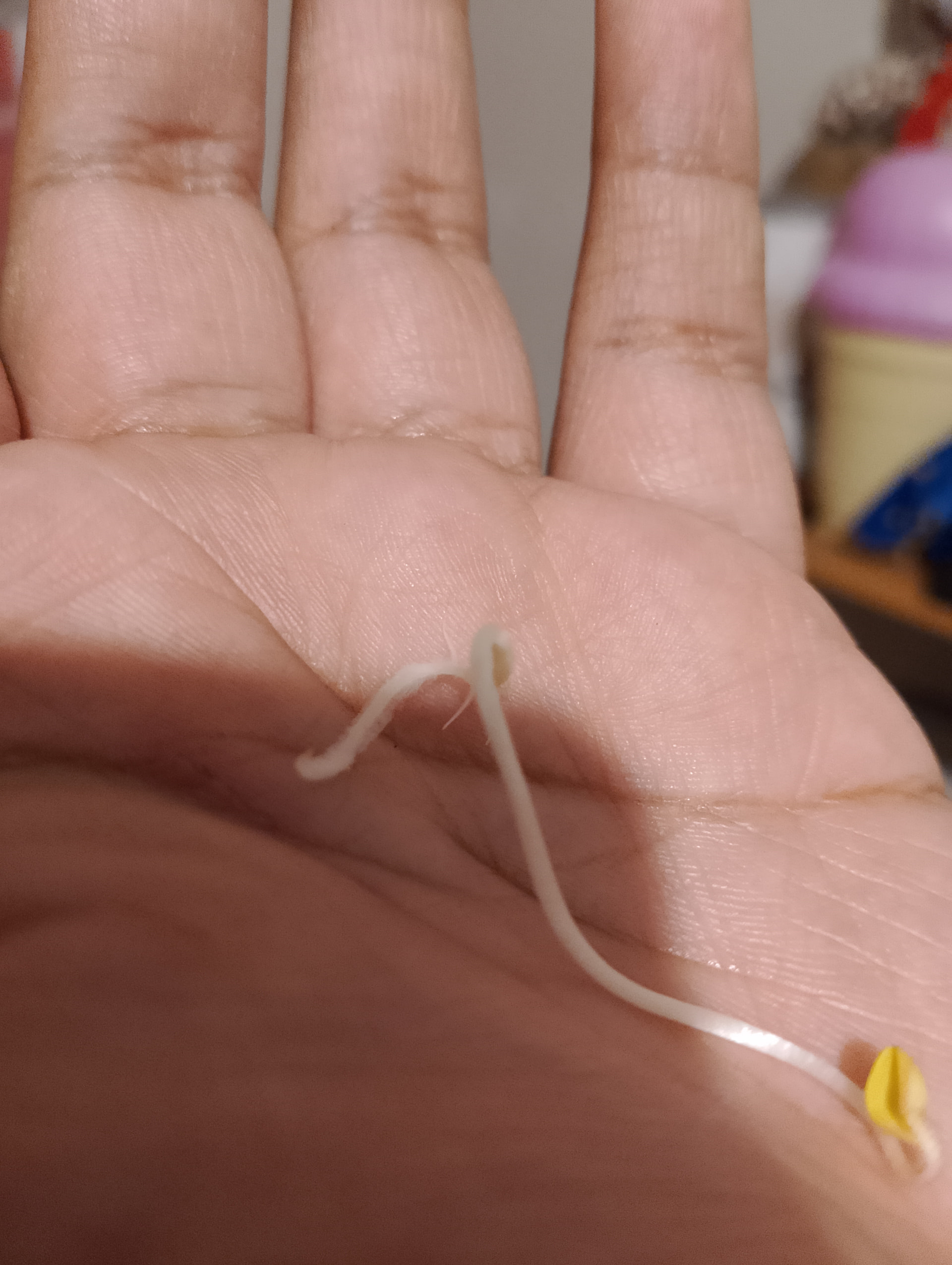
My germinated seeds have some small hairs like the one in the image but I don’t know what’s causing it.
1 Like

At the bottom end, you can see very fine hairs, these are the roots that supply the plant with water and nutrients. The actual question is, why isn’t it in the soil?

5 Likes

That is roots attempting to form. Without something to grow in the clock is ticking for it now.

3 Likes

I agree that thing should have been in some sort of medium when the taproot was 1/4” long. Be careful that you don’t stunt it.

3 Likes

thoze R roots

1 Like

Those tiny little wisps near the bend are indeed just early root hairs starting to form, but the big takeaway here is how long and pale that stem is. This little sprout has actually moved way past the simple “germinated seed” phase and has been left in the dark a bit too long.

Here is exactly what is happening and what you need to do right now to save it:

What’s Happening: It’s “Stretching” for Light

When a seed pops in the dark (like in a paper towel or a dark cupboard), it uses all its stored energy to rapidly stretch upwards, frantically searching for a light source so it can start photosynthesizing.

Because it hasn’t found light yet:

The stem is very long, thin, and white. The tiny yellow leaves at the bottom of the photo (the cotyledons) are clamped shut and yellow instead of open and vibrant green.

How to Save It (Step-by-Step)

This sprout is in a delicate spot because it’s so long and fragile, but it is absolutely salvageable if you get it into medium and under a light immediately.

1.Plant it deep:

Get your starter pot ready (whether you’re using Fox Farm soil, coco, or plugs). Because the stem is so long, you want to bury a good portion of it. Dig a hole deep enough so that when you place the sprout inside, only about an inch or so of the stem and the yellow leaves are poking out above the surface. Burying the long stem will protect it from snapping and allow it to grow roots right out of the buried sides.

2. Orient it correctly:

Put the root end (the curved, fuzzy part near the top of your hand) pointing downward into the medium, and leave the yellow leaf end pointing up.

3. Give it light immediately:

As soon as it’s tucked into the soil, put it under your grow light. Don’t blast it with intense, 100% power heat, but give it enough light (even a basic household LED or a dimmed grow light a couple of feet away) to signal to the plant that its search is over.

Once it senses the light, those yellow leaves will open up, turn a deep green, and the rapid, leggy stretching will stop. Be super gentle handling it right now, get it tucked into its new home, and it should bounce right back!

4 Likes

Yea, basically de fatty aminos and proteins from da seed itzself dissolve in water, de E.c. and mineral content of water helps complex sugars (well glucose) stretch da now mushy protein bonds to follow an emf or a static field in this case from da ground to a positive polorization’ source
Think reverse lightning :smirking_face:

At some point osmosis occurs and all da proteins acids fats and what nots breakdown into a stale soup…

I know too much information :zombie: