Hello friends, as some of you already know, in this cultivation I used phytohormones or plant hormones to experiment and see what happened and if it was worth using them to improve quality or production.
I started with 7 plants, 2 autoflowering and 5 photoperiod fast version. I used the automatics to test the doses and short-term effects before applying anything to the 5 photoperiod plants.
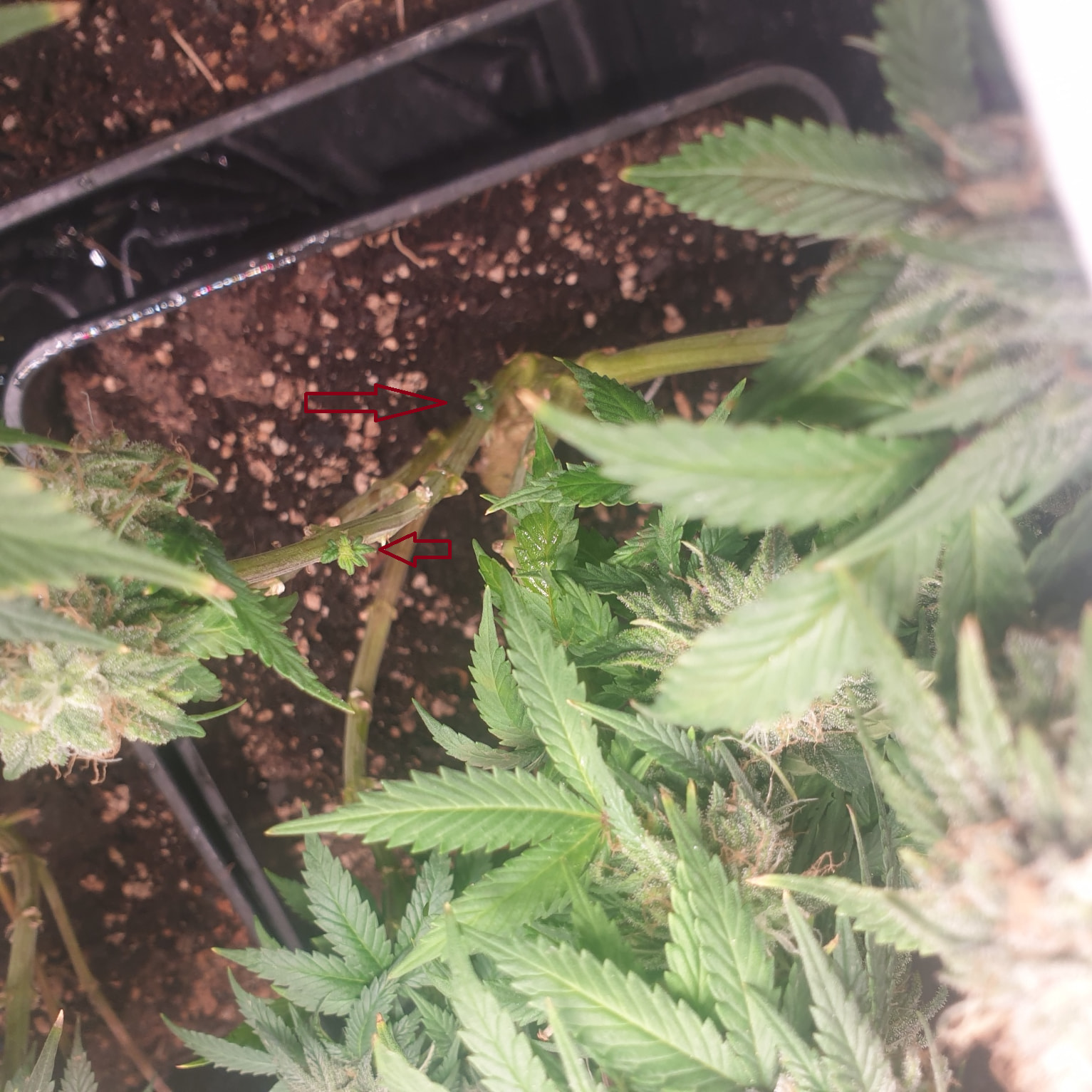
The truth is, I generated a lot, a lot of hormonal stress for the automatics, despite this, they did not become hermaphrodites, although they did significantly delay their vegetative growth, to the point that I didn’t think they would make it alive to flowering, but they did. One of them had a benign deformity, which is a branch with 3 nodes per shoot, that produced a large bud.
Likewise, these two plants are not for consumption, both will be discarded. In fact, one of them already went to the trash. Even though it didn’t show anything visually wrong, they received too many hormonal applications and there’s no need to consume them, so as planned, I will discard the other one when its cycle ends.
The plant treated from seedling with cytokinins produced many more branches than the rest, possibly almost double the branches, but generally with smaller and somewhat airy buds. I must say, I didn’t like the effect of cytokinins in vegetation; yes, it creates more branches and more shoots, but smaller buds, I don’t think that’s a plus, I would say it doesn’t compensate for having such a branched plant.
The other plant received gibberellins, which are responsible for cell elongation. In this case, the nodes between shoots were quite larger, showing a good empty space between node and node (bud). Although initially it seemed like something “bad” to me, I must say the buds are large. Furthermore, this plant’s resin production is so far the most it has generated, so I don’t rule out trying to use them again in the near future.
Tomorrow I will enter the 7th week of flowering. At the beginning of this week (the 6th), with the hormone doses clearer and the hormone preparations ready, I decided to give them a small hormonal “boost”. It consisted of a micro-irrigation of 300ml per plant of:
base water 300EC, cal-mag 400EC, 10ppm kinetin, and 100 EC of deepunderground and a little molasses for a total of 800EC, applied to the substrate in a ring. (only 300ml, normal watering would be 2000ml per pot).
Well, the plants were already entering their final stretch, no new hairs or new calyxes were emerging anymore, it was ready to mature.
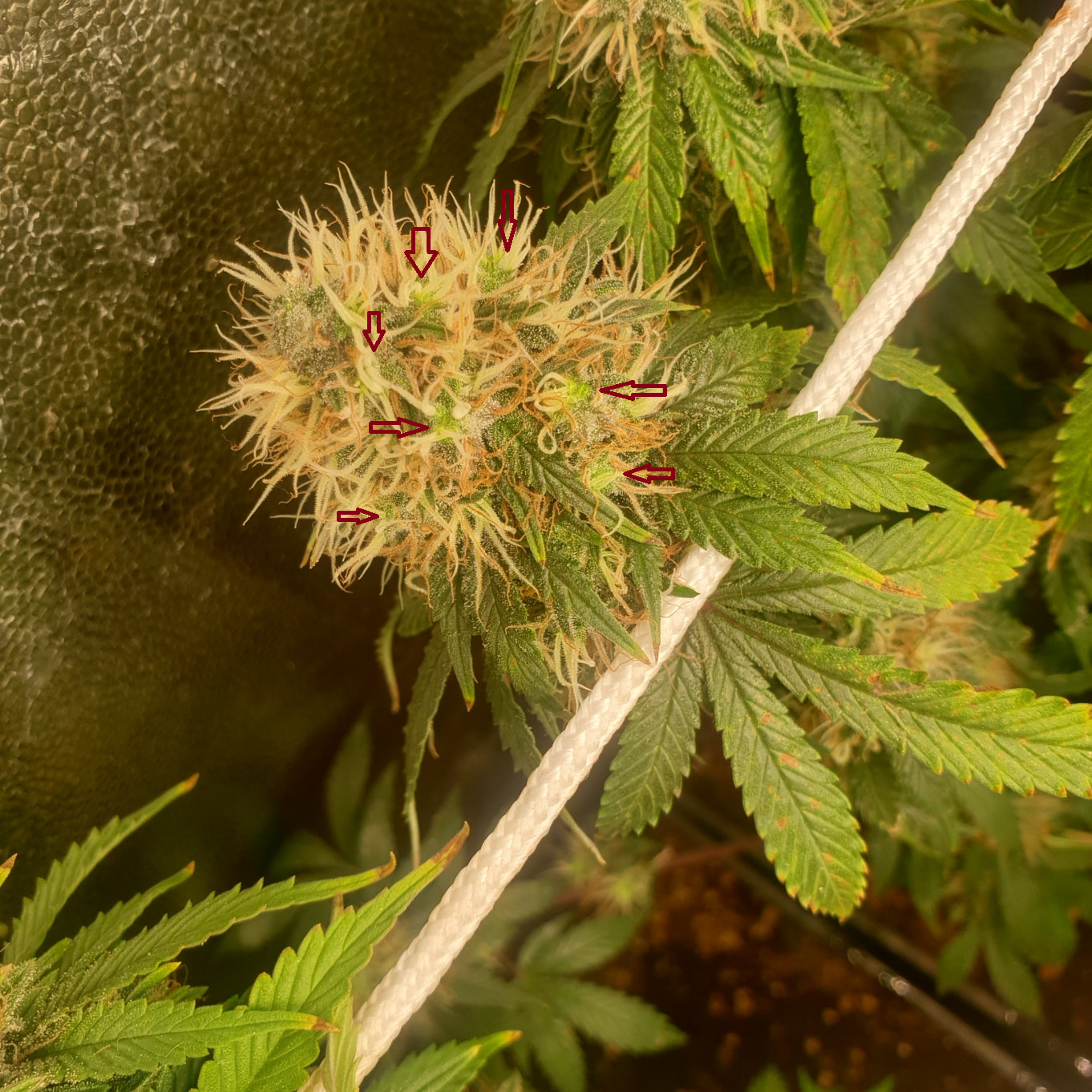
Two days after the application, I see that the buds are re-sprouting new calyxes and new hairs. Apparently they have worked wonderfully and fulfilled their role; they have re-ordered the plant that it’s time to create shoots and fatten up, not to mature!
I still don’t know how long the cytokinin boost will last and how much it will delay maturation, but they have undoubtedly worked and undoubtedly help with fattening. At least it can be said that I did manage to discover the appropriate doses and the best application times. Regarding whether it’s worth it or not, I don’t think that for self-consumption, say, an extra 30% is worth it, I don’t think so. In large cultivations, a 30% would indeed be a large percentage, but for a few plants, I don’t think so.
In the next one, I will focus more on researching gibberellins and cell elongation, which is, in theory, the right path for improving flavors, aromas, and THC.
Today, later, I will edit and upload recent photos, since they are currently in the dark period, and even though I see the plants every day, I don’t take photos every day. These are from 2 days ago, that is, 2 days after the application of cytokinins.
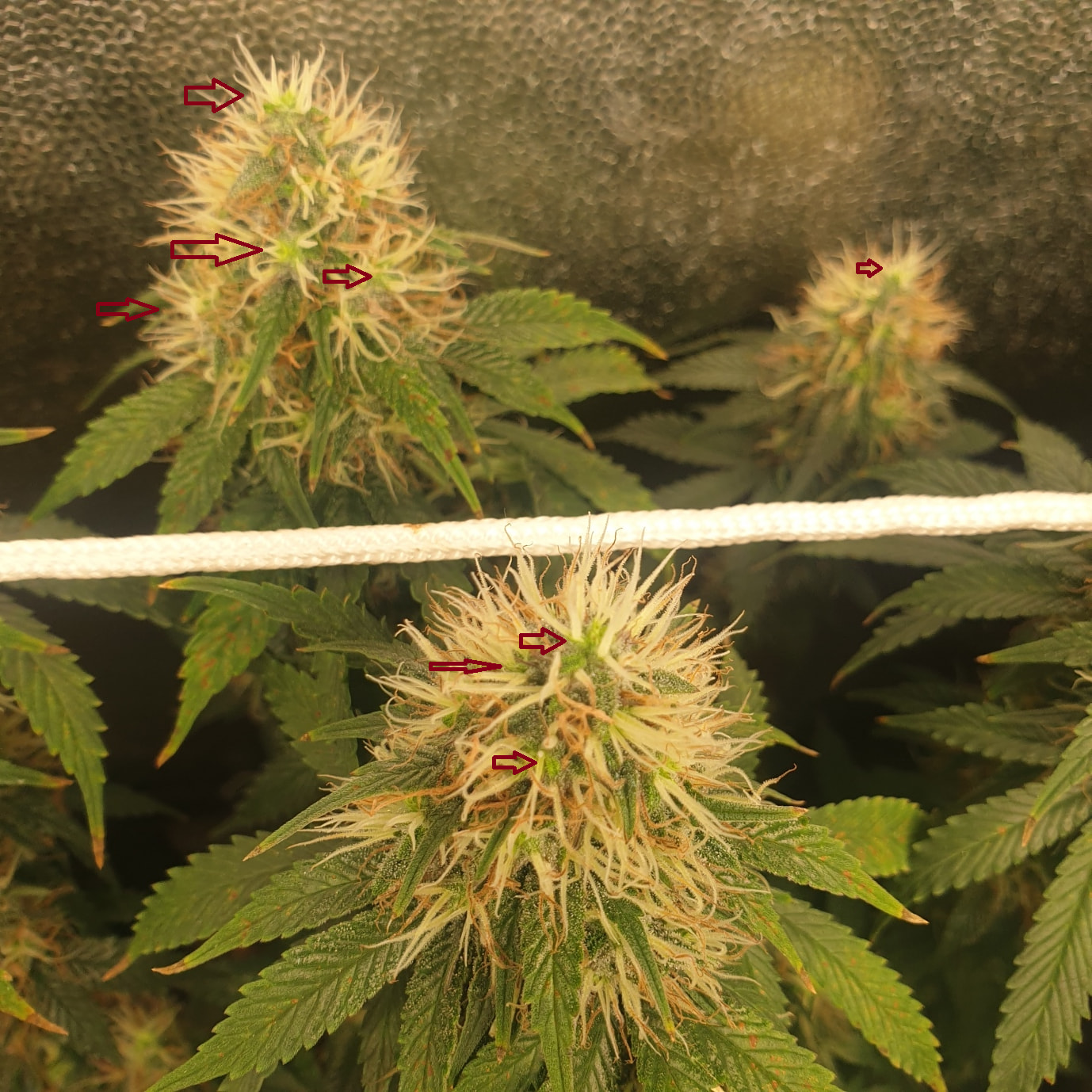
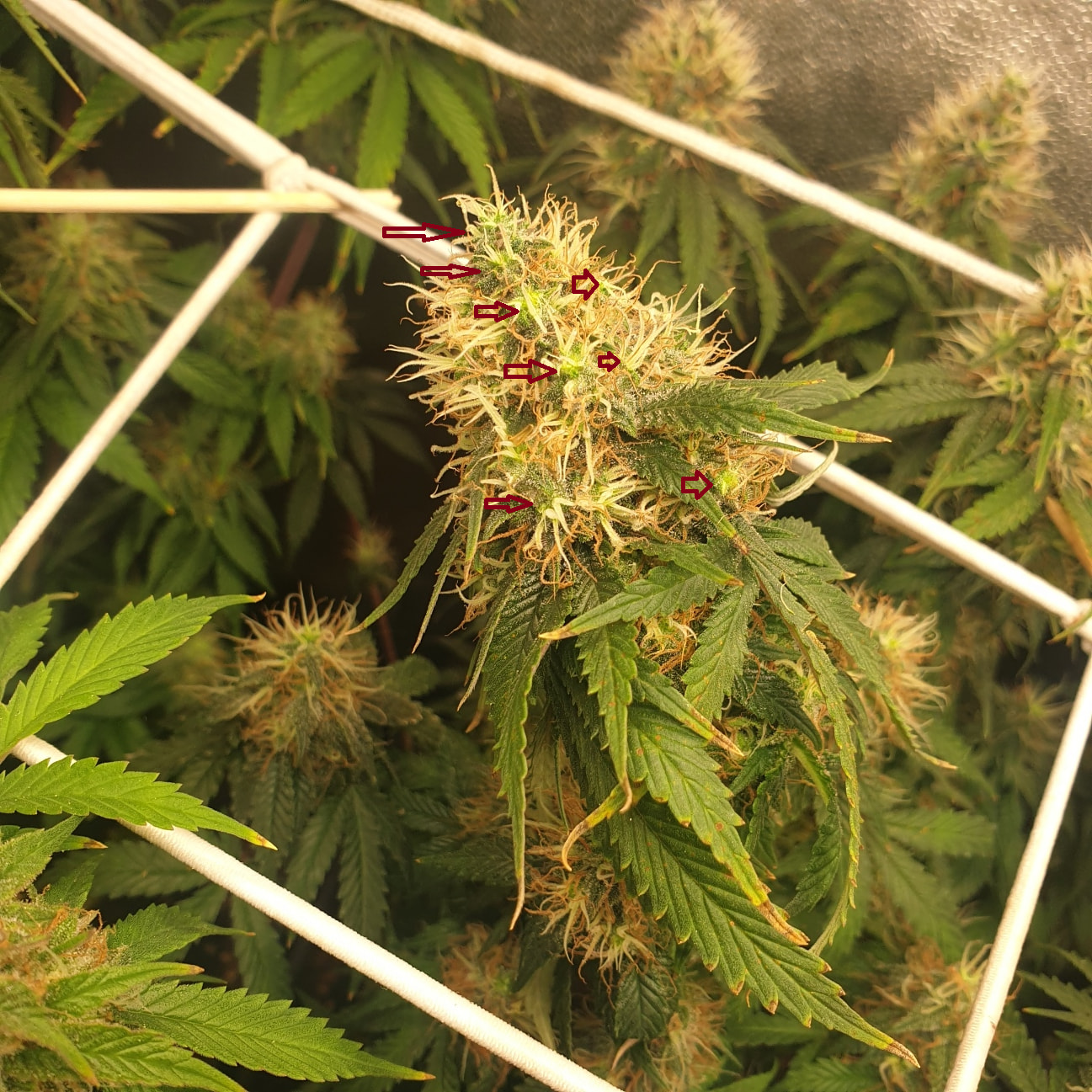
It’s not very clear, because I didn’t take good photos, but the new light green shoots and their new white hairs are visible, on buds that were already starting to mature. I promise to upload new photos today, so the effect of the cytokinins can be seen more clearly.