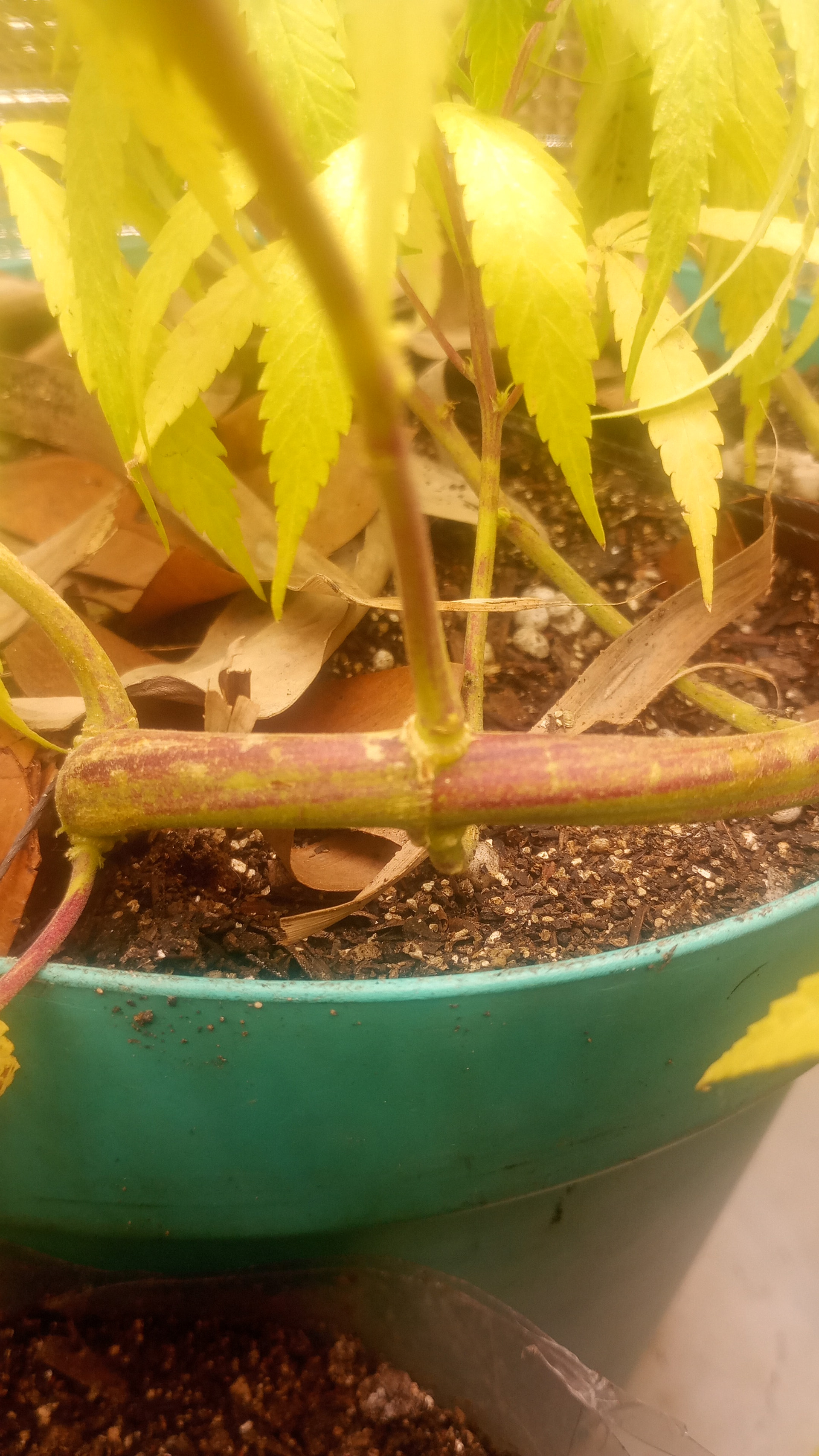
Withered leaves with black spots

Good evening growers, I have this plant.

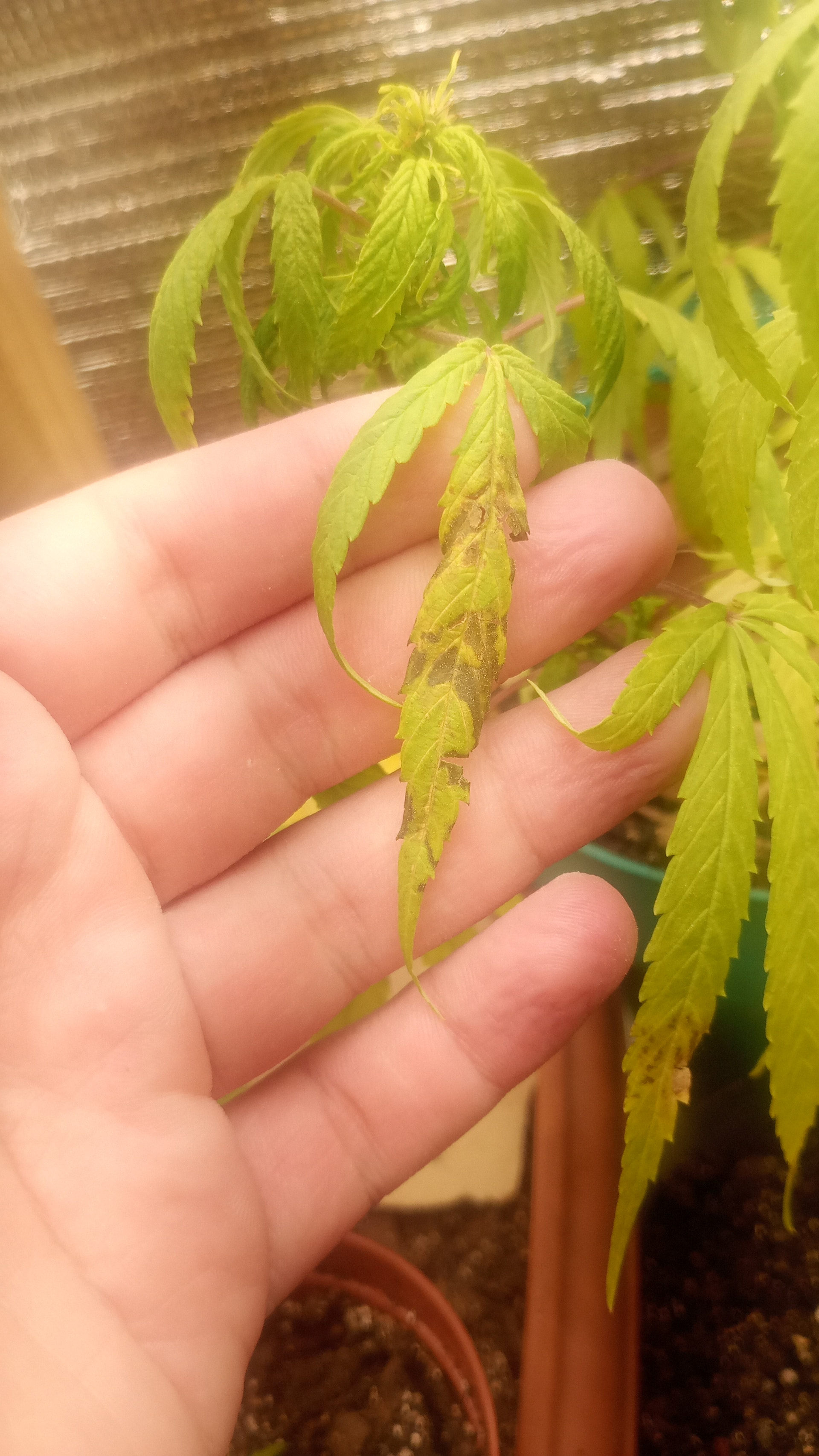
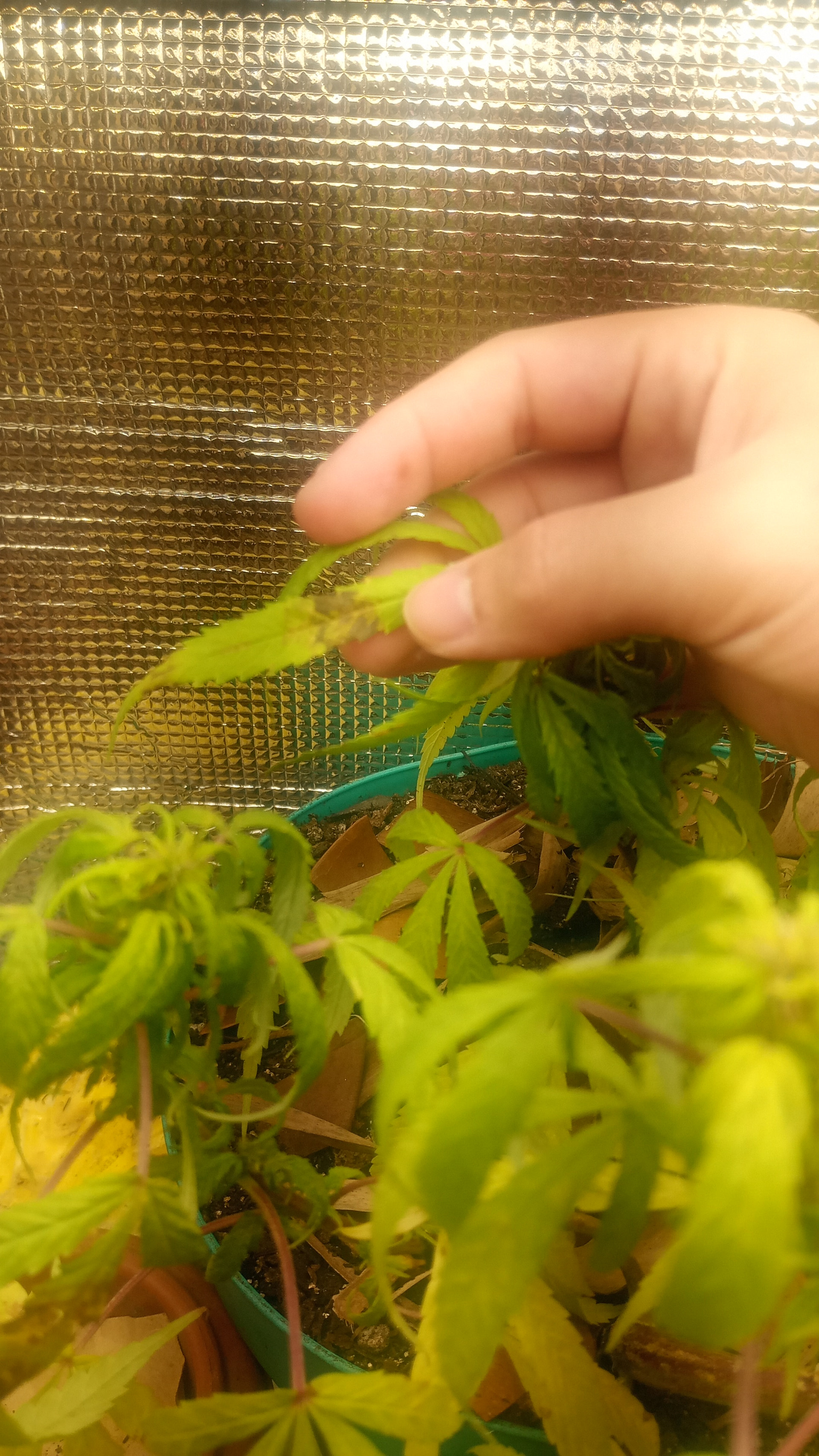
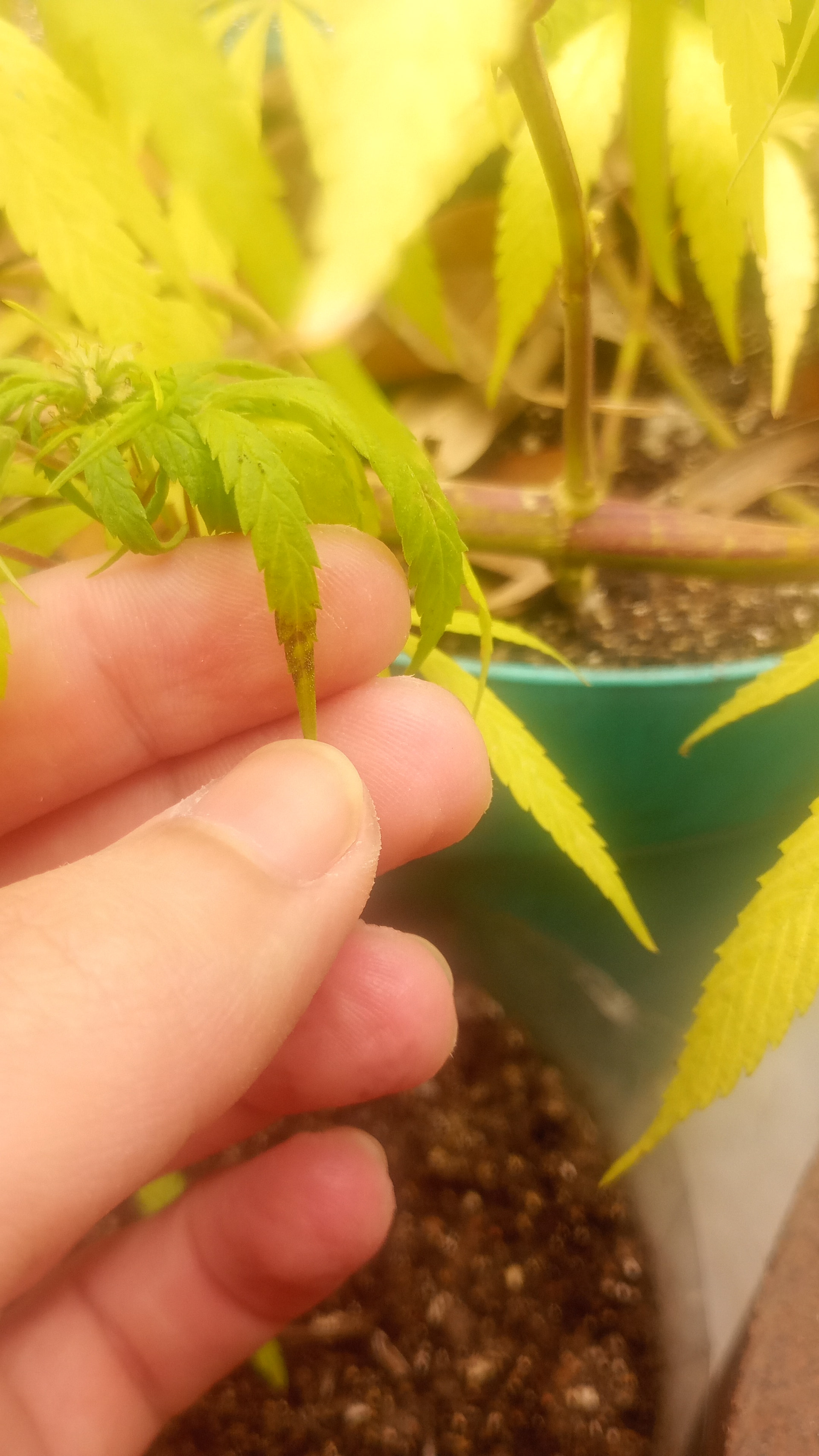
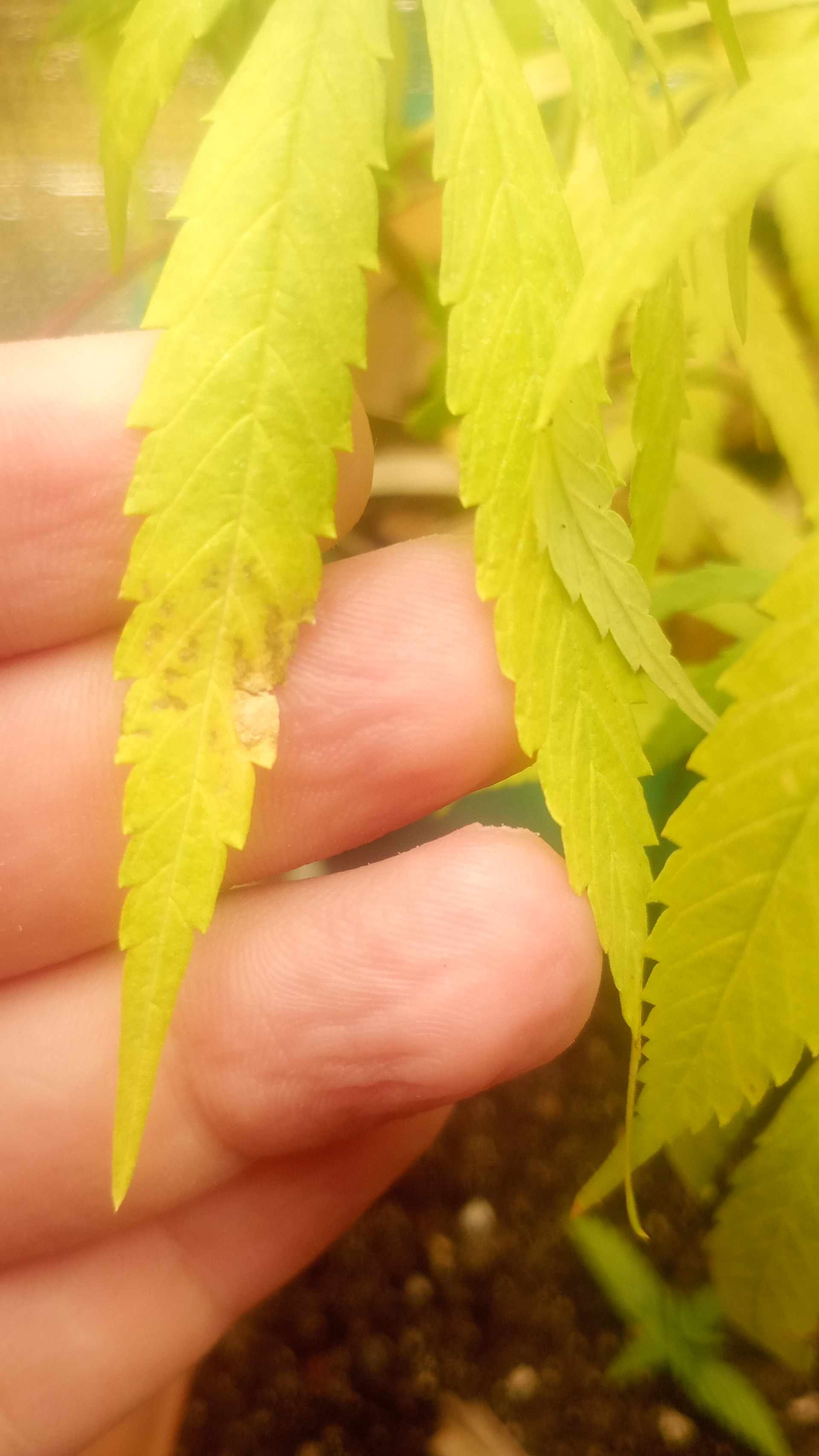
A while ago I was away for four days, when I came back they were wilted, and now recently the stem started to turn reddish and the leaves show these black spots. Besides that, they are also yellowing.

I’ve been told it’s overwatering, underwatering. Has anyone with experience or who has been through this already able to help me?

Or knows how to recover them and if they can be recovered.

I cultivate outdoor, lately it’s been very cloudy and without sun in the region. Because of this, I made an improvised grow of 50x50x90 and with a 120w Full Spectrum LED panel.

Thanks in advance!

1 Like

Looking at the leaves, it appears to be overwatering. This also disrupts nutrient uptake. Let the plant dry out thoroughly until the pot is light again. After that, start watering slowly again and hold off on nutrients for now, as the plant has not yet utilized the ones already given. The damaged leaves will not recover; you can remove them.

4 Likes

Hey, so just by looking at the photos, I see signs of significant plant stress, characterized by widespread yellowing (chlorosis), necrotic brown spotting on the leaves, and reddish-purple stems.

These symptoms often point to a combination of environmental and nutritional issues rather than a single cause. Below is a breakdown of the most likely culprits based on the visual evidence:

1. pH Imbalance (Most Likely Primary Cause)

When the pH of your growing medium is outside the optimal range (typically 6.0–7.0 for soil), the plant experiences “nutrient lockout.” Even if you are providing nutrients, the roots cannot absorb them, which causes symptoms that mimic multiple deficiencies simultaneously.

Why it fits: The combination of yellowing and spotting across different areas suggests the plant is struggling to uptake several mobile and immobile nutrients at once.

2. Nutrient Deficiencies

Nitrogen Deficiency: The general yellowing, especially if it started from the bottom and is moving upward, is a classic sign of nitrogen deficiency, which is common during vegetative growth.

Calcium/Magnesium (CalMag) Deficiency: The brown, “rusty” spots and the reddish stems are frequent indicators of a calcium or magnesium deficiency. Calcium is vital for cell wall structure, and its absence often leads to these necrotic spots and weak stems.

Potassium Deficiency: If the edges and tips of the leaves are turning brown and crispy, or if the leaves are curling/twisting, it may indicate a lack of potassium.

3. Watering and Root Health

Overwatering or Drainage Issues: The drooping appearance and the yellowing can be caused by root suffocation from overwatering or poor drainage. If the roots cannot get enough oxygen, they become unable to transport nutrients effectively.

4. Pests or Fungal Infections

While nutrient issues are more likely, Leaf Septoria or fungal “rust” can also cause rust-colored spots. Check the underside of the leaves for signs of pests (like spider mites or aphids) or fuzzy mold growth, especially if the growing environment is humid or lacks proper airflow.

Recommended Steps to Address the Issues

Check and Adjust pH: This is the most critical first step. Ensure your water and runoff pH are in the correct range (5.8–6.2 for hydro/coco, 6.0–7.0 for soil).

Evaluate Watering: Ensure the pots have proper drainage and allow the soil to dry slightly between waterings. Do not let the plant sit in stagnant water.

Improve Airflow: Ensure there is adequate ventilation and fans to prevent stagnant air, which encourages fungal issues.

Check Environmental Factors: Ensure the light source isn’t too close, which can cause bleaching or heat stress, and monitor temperature and humidity.

Consult a Feeding Schedule: If the pH is correct, consider if the plants are being underfed or if there is a nutrient salt buildup in the soil that needs flushing.

Hope this helps a little. Good luck :grin::+1:

2 Likes

Hey, thanks, man, in my case I can’t measure the pH. Is there another way to check or only with a device?

1 Like

Good, I’ll clean it up gradually then so as not to stress it anymore.

1 Like

I see you say you grow outdoor but you changed it to indoor 120w LED; before reading this, it already looked like a calcium problem in the photos to me, I had it a couple of times.
I don’t know who sold you the LED, but grow shops usually warn that you must buy calcium and magnesium, as LEDs cause serious deficiencies.
With this, I want to tell you that, even if it were healthy, upon changing it to LED, it would show calcium deficiencies.
If it was already doing poorly, sick, or lacking food, everything gets worse.
I think we all agree on certain things:
1st It lacks food, especially nitrogen, that’s why they are not green, probably due to a lockout; that lockout is causing you problems.
We don’t know how much you’ve watered or how moist your substrate is; you need to tell us that. If it’s your first time, don’t worry, there are ways to get an idea.
If the soil has always been moist/soaked, it’s overwatering; the soil must dry, it must look dry. If it looks moist on top, it’s soaked with water underneath, so if you’ve seen the top of the pot daily more moist than dry, it’s excess moisture, and if, on the contrary, it was due to lack of watering, you would notice the soil truly dry, parched, like dust.
It’s either one or the other.
Then, regarding the pH, it’s something that shouldn’t matter much if you use organic fertilizers, which is most likely.
I’d say it’s overwatering, and the roots are suffocating from lack of oxygen.
If so, the correct approach would be:
Option 1: wait for it to dry, stick a small stick into the soil, open it up a bit, break the surface layer, anything that helps the water evaporate.
When the substrate is ready to water again, give it food, because it’s very yellow, manufacturer’s minimum dose, and CALCIUM.
Option 2: with more risk, with “hydrogen peroxide” (peroxido de hidrogeno al 3%) that we all have at home and is in all first-aid kits, a few drops per liter (I don’t know, 2 drops per liter), prepare irrigation water with fertilizers and calibrated pH if possible. If you can’t, I’d tell you to buy bottled water and look up its pH on the internet. You could put a little lemon juice in the irrigation water, but without being able to measure it…
The best would be for you to tell us more.

1 Like