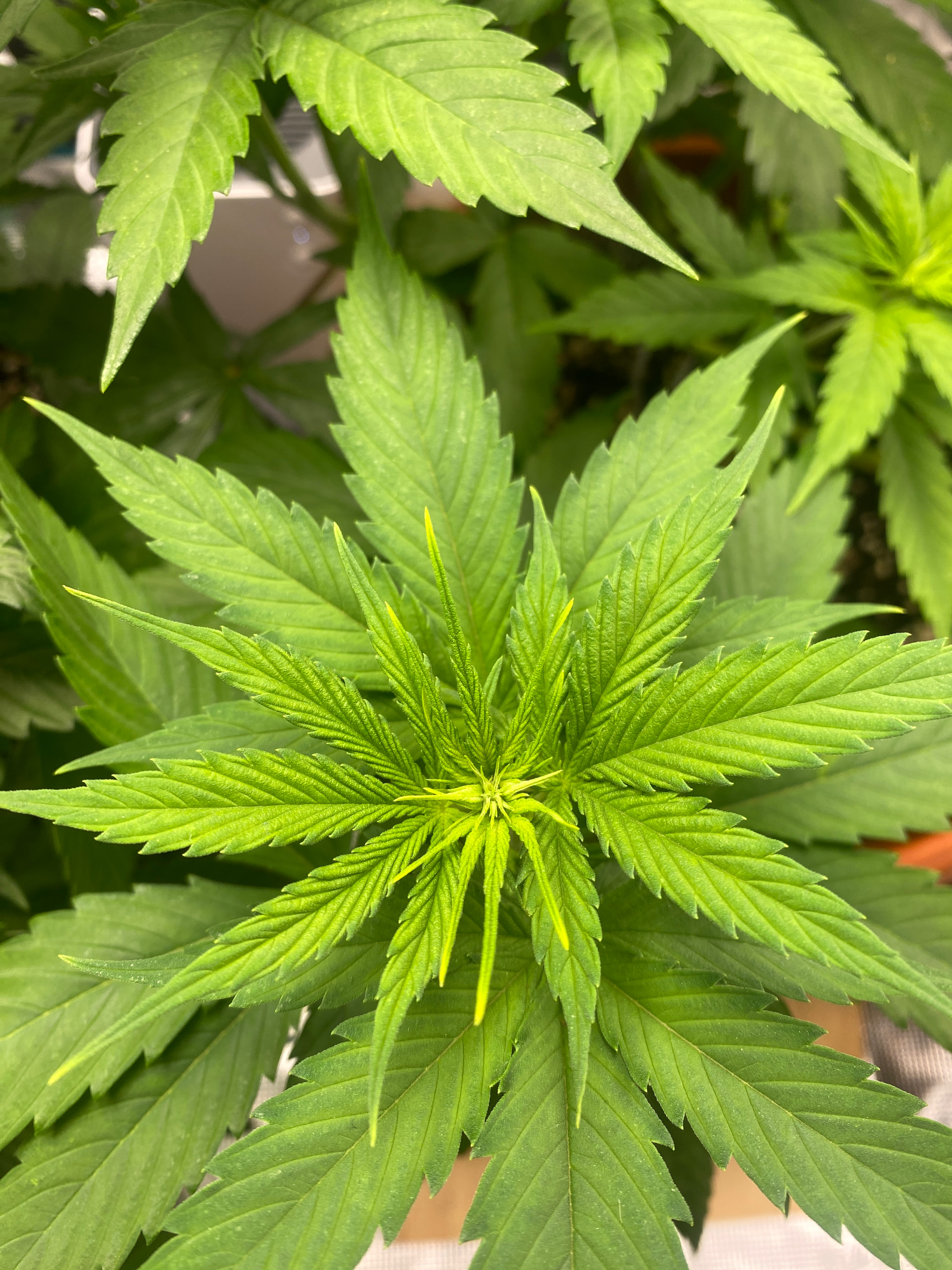
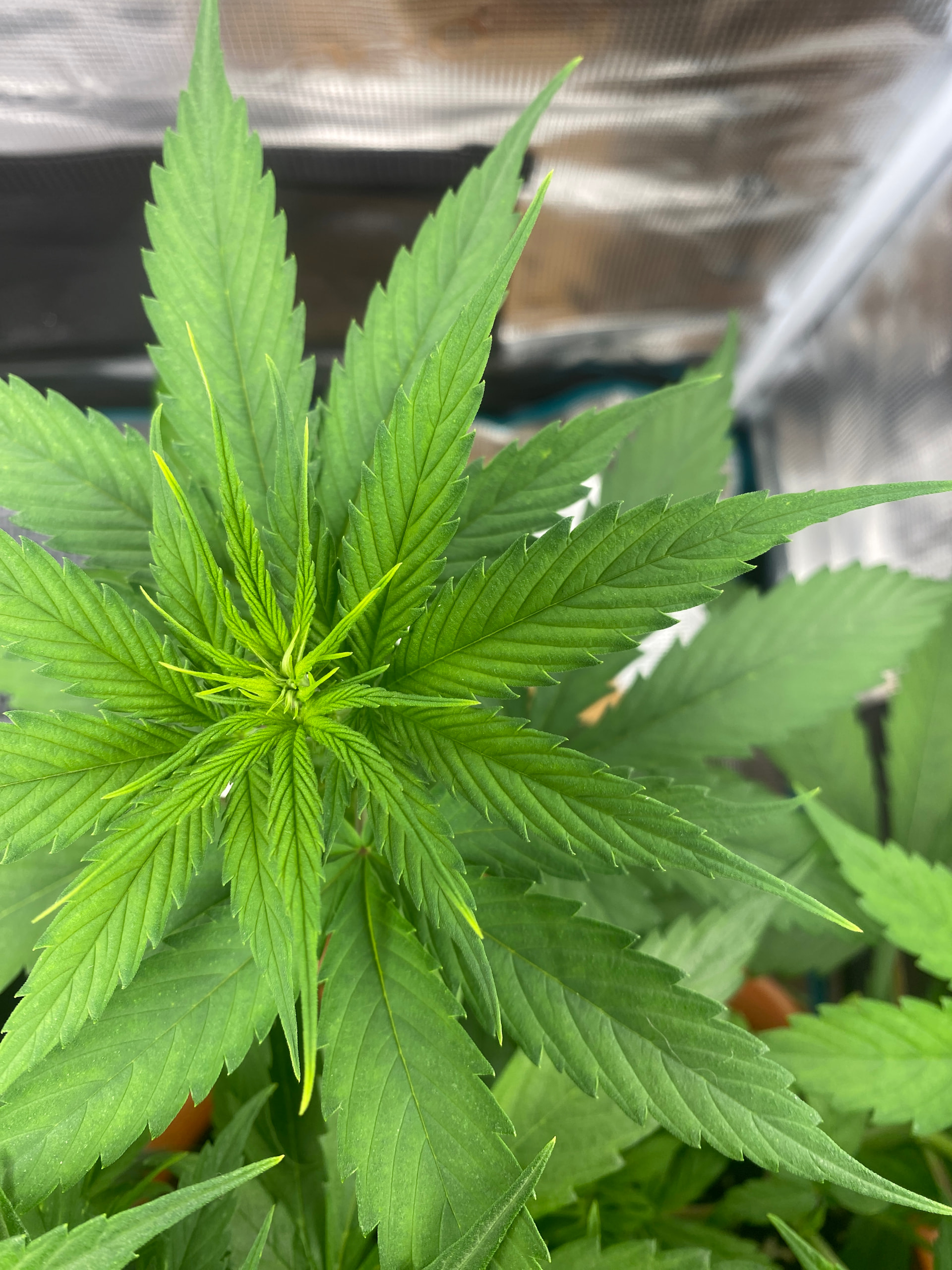
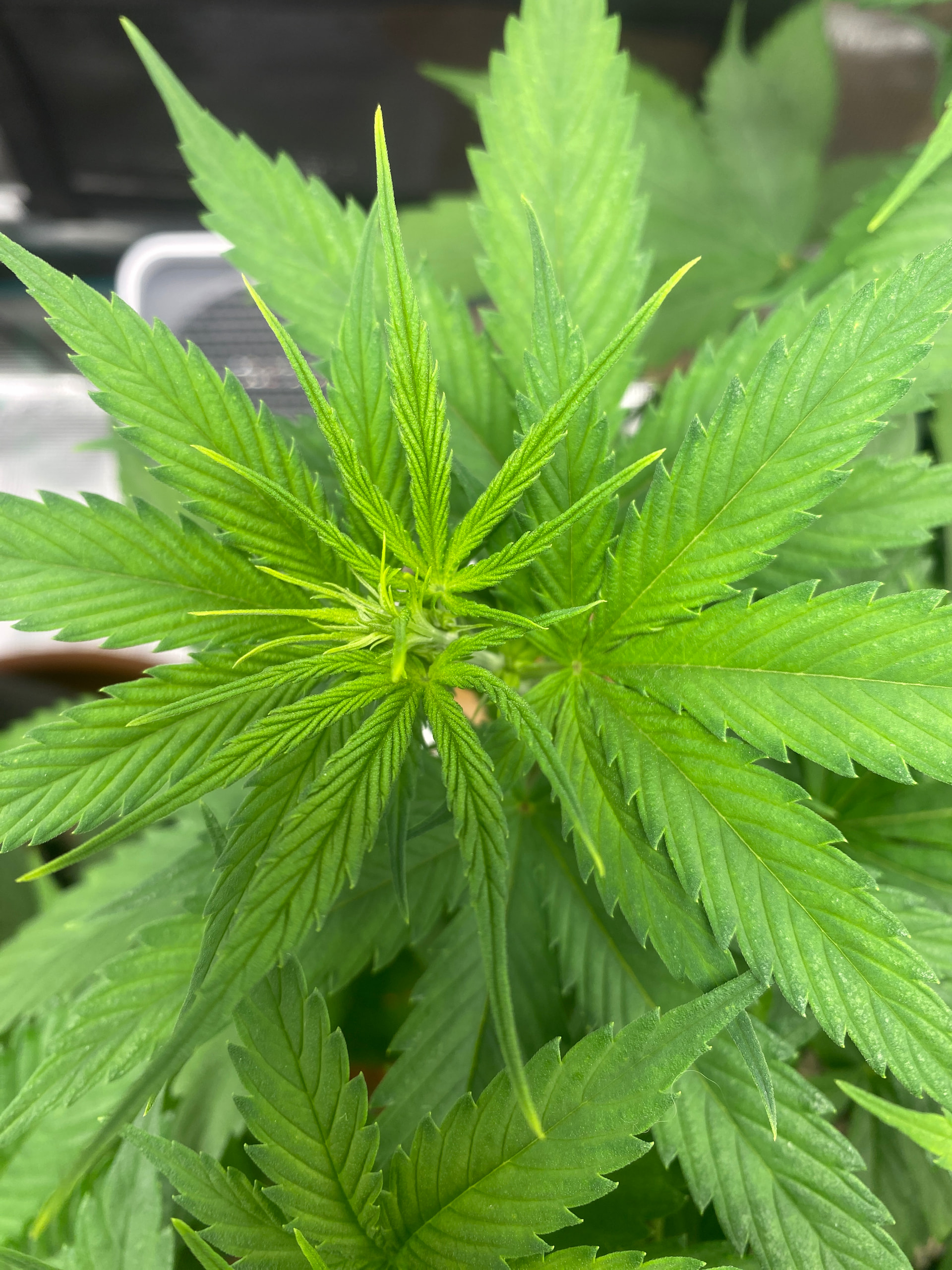
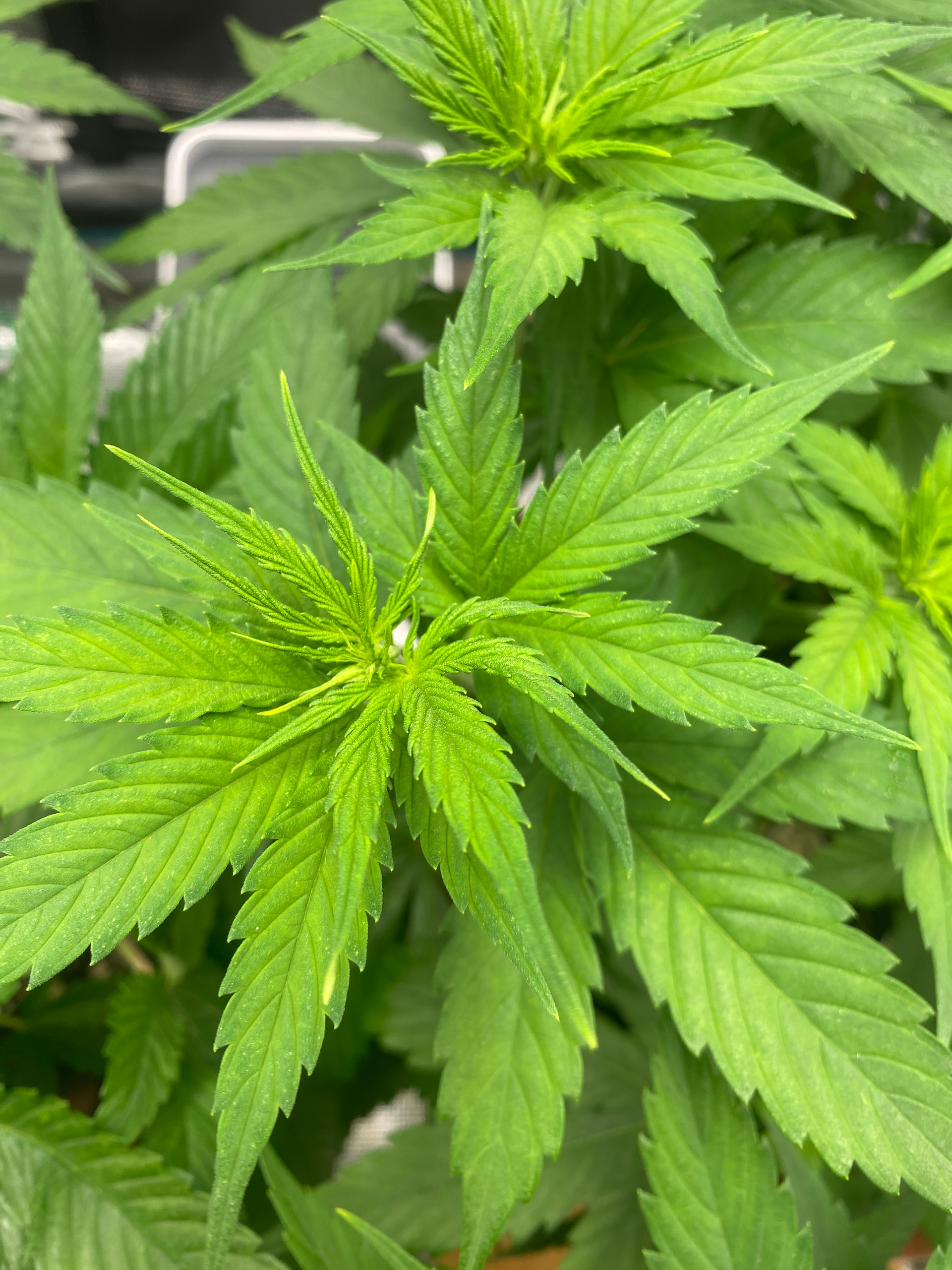
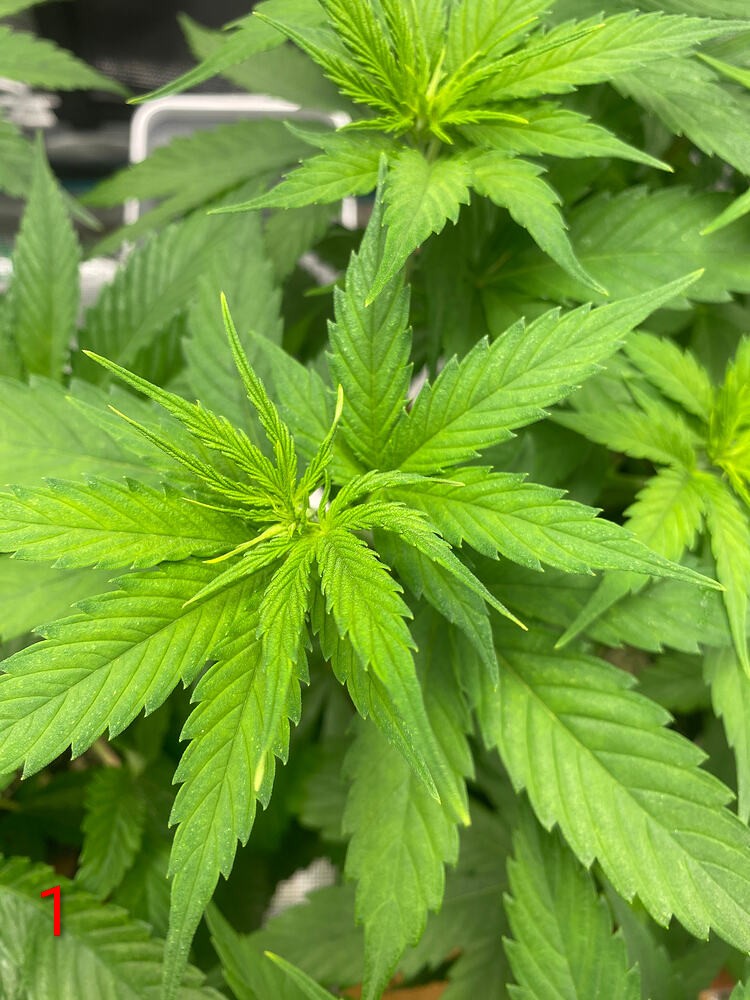
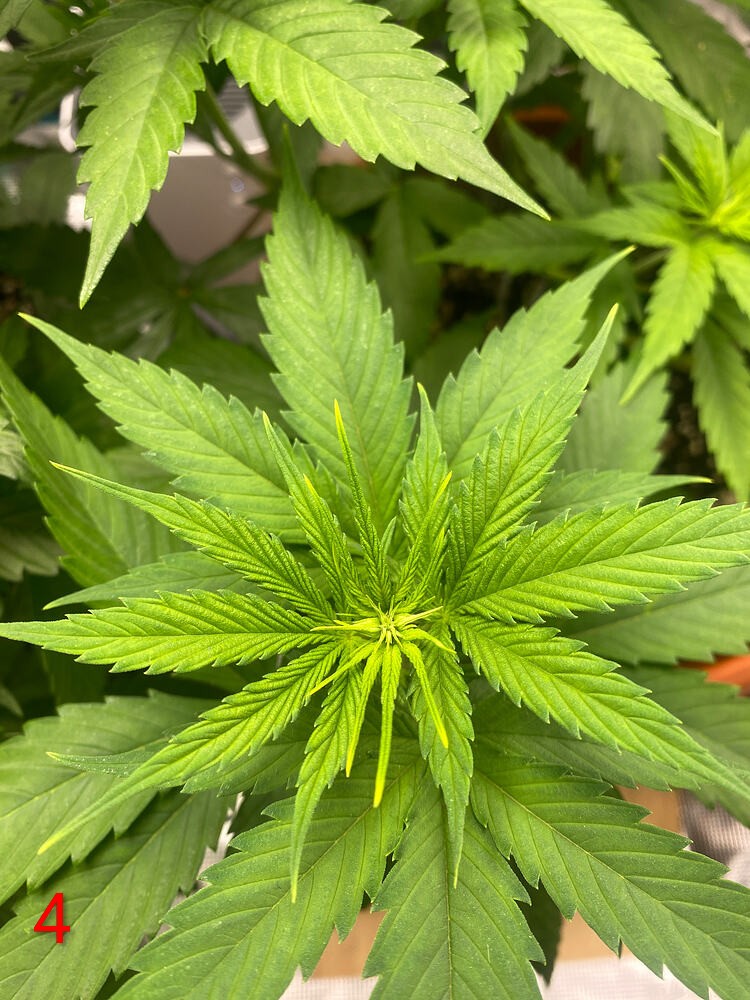
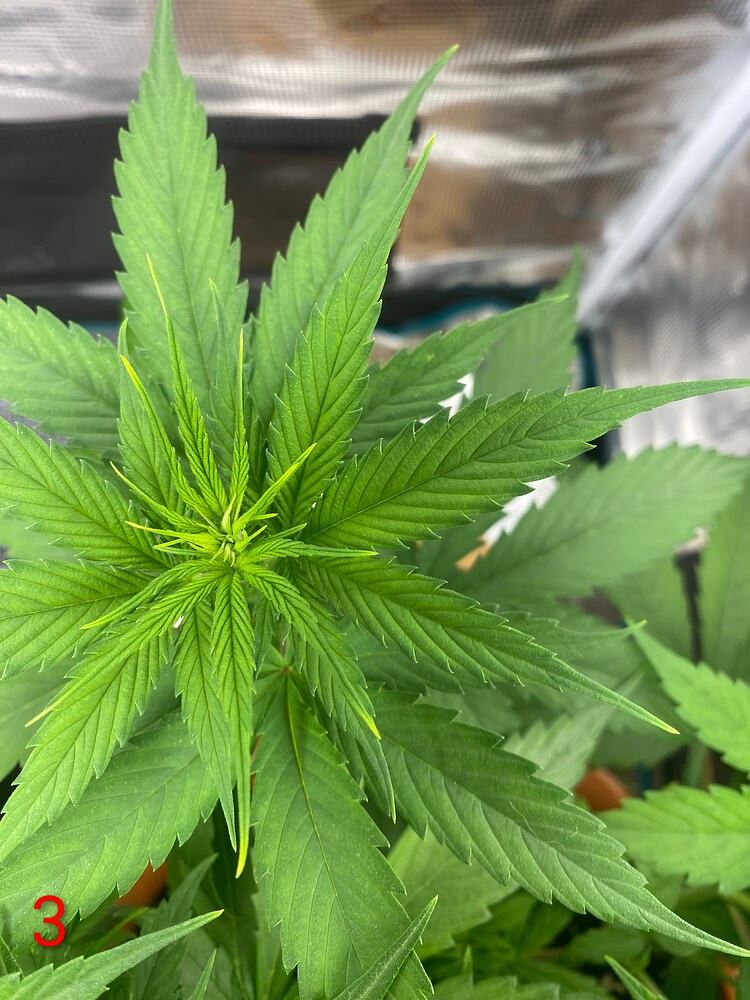
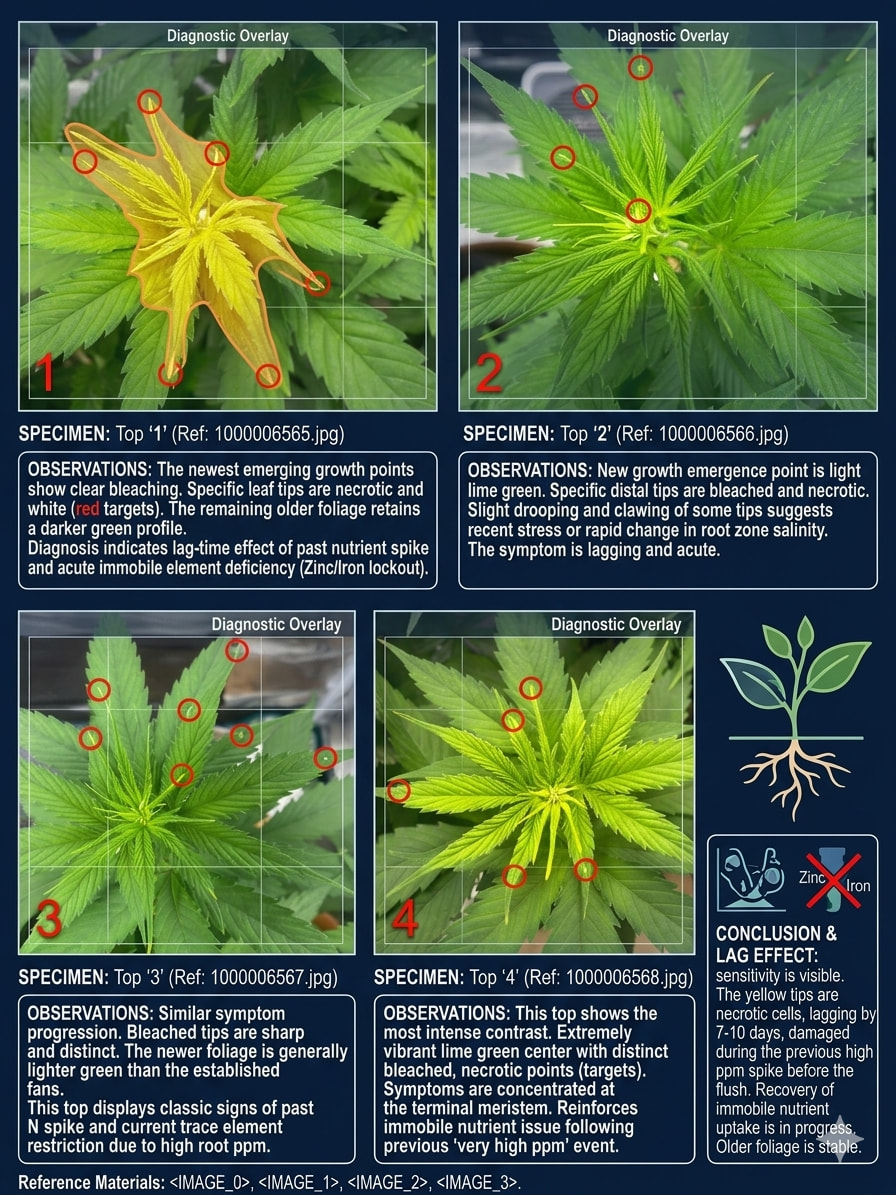
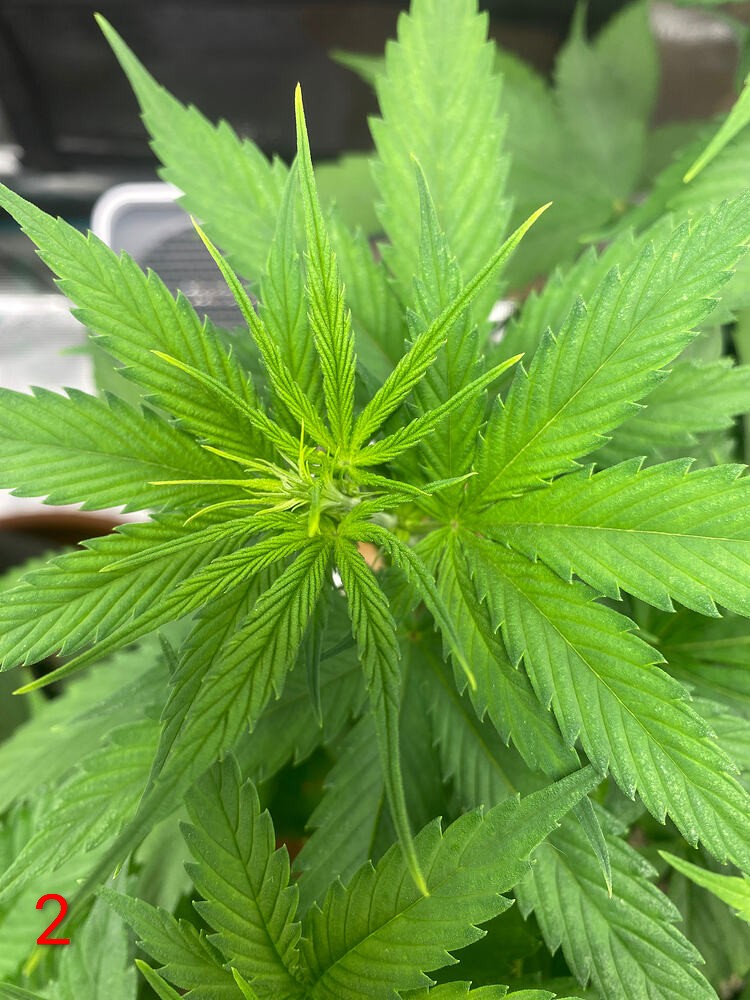
Looking closely at your images, the plant actually looks incredibly vibrant, structurally sound, and healthy overall. The slight lime-green transition at the very center of the growth tops is completely normal for a plant growing at a fast pace during week 4 of veg—new cell division hasn’t quite packed in the chlorophyll yet.
However, those distinct, bright yellow/white tips on the absolute newest growth (especially visible in image 1 and image 4) do tell a specific story, especially when considering your recent flush.
Here is the breakdown of what is likely happening and how to address it:
1. Incipient Nutrient Burn (The “Tip Singe”)
Even though you are feeding a diluted nutrient solution now, your runoff ppm is still sitting at 750 ppm. For soil, 750 ppm is a moderate-to-high baseline for a 4-week-old plant, depending on the scale your meter uses (500 vs. 700 scale).
Since you previously had a “v high ppm” issue that required a flush, the roots likely experienced a brief period of nutrient overload.
What you are seeing on the tips is a classic “nutrient tip burn.” It is a lagging indicator, meaning the damage to those specific cell tips happened right before or during the peak of that high ppm spike, and it is only now pushing out and showing as the leaves expand.
Why the White Widow is fine: Different strains have entirely different nutritional thresholds. Critical is known to be a heavy producer but can sometimes be a bit more sensitive to sudden EC/ppm spikes in the root zone compared to rugged old-school genetics like White Widow.
2. Minor Zinc or Iron “Lockout” (Immobility Check)
Because the yellowing is localized strictly to the newest growth while the older leaves remain a rich, deep green, we know we are dealing with an immobile nutrient.
Elements like Iron (Fe), Zinc (Zn), and Sulfur (S) cannot be moved by the plant from old leaves to new leaves.
A massive ppm buildup—or the subsequent heavy flushing process—can temporarily disrupt the roots’ ability to uptake these micro-elements evenly, causing the newest tips to emerge bleached or yellowed.
Action Plan
Since the rest of the fan leaves look pristine and your pH (6.6) is absolutely perfect for soil, you don’t need to make any drastic adjustments. Avoid over-correcting, as the plant is already on the mend.
Stay the Course with the Current Feed: Keep giving it your diluted grow nutrients. Let the runoff ppm drift down slightly lower (around 500–600 ppm if using a 500 scale meter) over the next couple of waterings to let the root zone settle.
Monitor the Newest Growth: The yellow tips on the existing leaves in and image 2 image 3 will never turn green again; they are permanently singed. The true test of recovery is the next set of leaves emerging from the center. If the upcoming shoots come out uniform green without the bright yellow tips, your issue is entirely resolved.
Let the Soil Dry Properly: Heavy flushing can temporarily saturate soil and restrict oxygen to the roots, which also mimics micro-nutrient deficiencies. Ensure you are letting the pot get light to the touch before watering again.