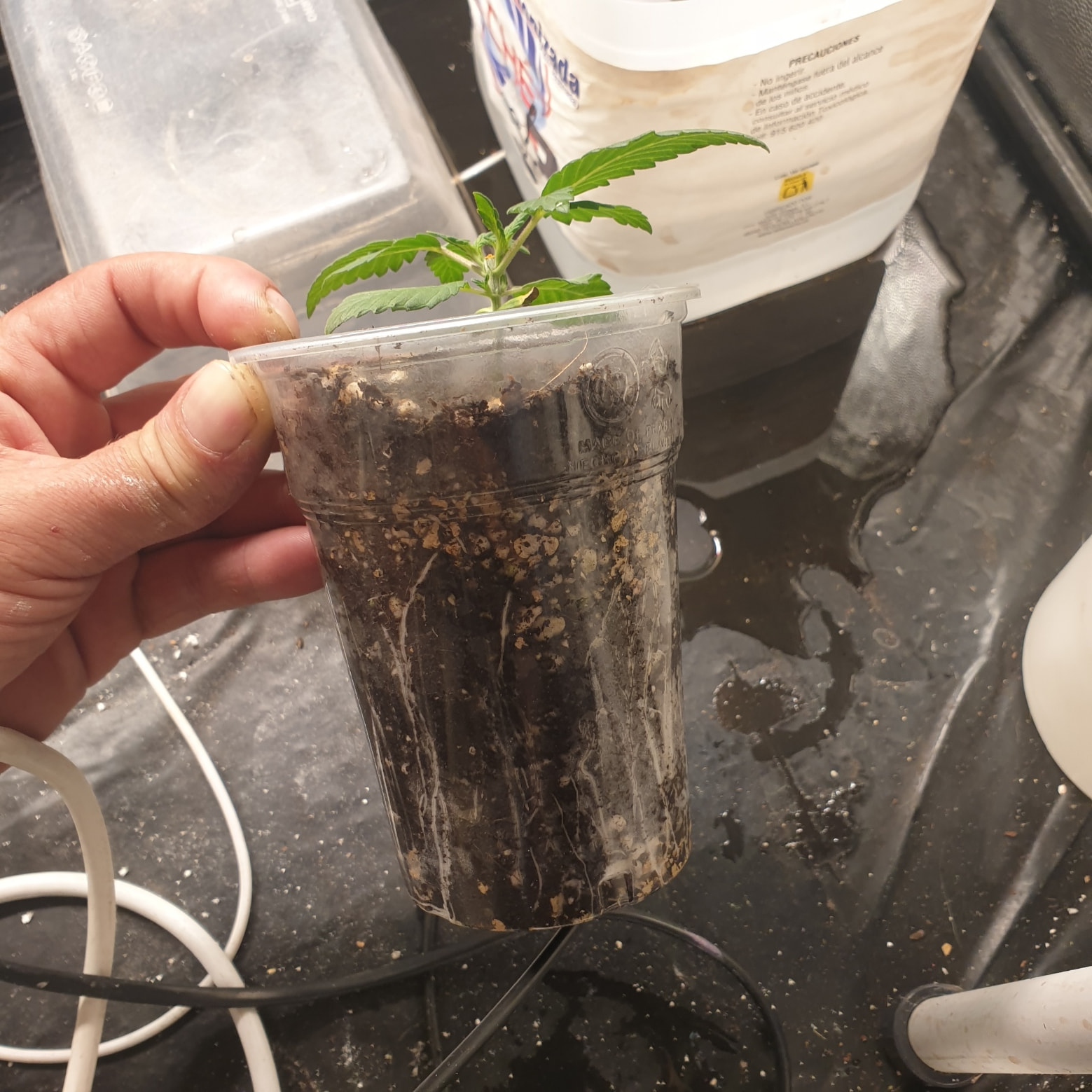
Question about flavor, smells, and THC

Hello friends, I hope you are well, I, as always, experimenting, reading, listening, testing.

The truth is, I was looking into the Original Cheese a bit, because I would really love to smoke it again, and by chance I read several things that I found interesting, and maybe someone involved in the topic or an expert can help me with quality information.

First, that the Skunk was already very, very stabilized.
Second, that it was a sativa accustomed to hot and dry climates.
Third, that it must have been in a very stressful environment for the plant.
Fourth, and most importantly, what struck me when I found out, because it actually makes a lot of sense, at least to the eyes of logic, an expert, I don’t know if they can confirm it for me, it turns out I read that what the substrate contains greatly affects it, that is, the organic content of the compost, first because the plant detects organic remains of other plants, and when the roots touch it and by memory assumes that there are plants around to compete with, also, the part that surprised me most not to see before, the recessive genes, apparently this is what created the Cheese (an important part of it), I already knew that it helped create more trichomes and terpenes, but I never thought that recessive genes could be awakened this way, and with them new flavors and smells, does anyone do this with this specific intention?
Actually, all this comes from a master inoculum I’m making (compost) to decompose the powdered sulfur I have and convert it into chelates, precisely to improve the smell and taste, but of course, after reading all this, I investigated a bit and it turns out that in theory it is like this, if the plant detects a substance in the substrate that an ancestor encountered, it is very likely that that recessive gene will awaken, right?

2 Likes

What you’re writing sounds very interesting. Unfortunately, I’m not familiar with it. However, I have already read that certain plants nearby cause an increase in terpenes. As far as I know, chamomile is one of these plants. It is said to increase the terpene content.

4 Likes

Yes, yes, that’s exactly what I mean, the plant has no eyes or touch, it reacts to substances in the soil, sometimes they are roots of other plants, sometimes insect husks, fungi, I knew that trichomes are a defense mechanism, and anything the plant detects as danger, be it UV, droughts, pests, fungi, but I had never stopped to think that recessive genes are awakened in the same way, for me it makes sense, according to what I read, more than 70% of aromas are not activated because the plant does not need them, I imagine it’s actually because it doesn’t detect the threat that activates that fragrance, that’s why it occurred to me if instead of making the master inoculum just to convert sulfur into sulfate, I could add absolutely everything organic I can get, grind it into powder, and add it to the compost, in addition to adding mother earth from, if you can, pine forests, willows, wild nettles, etc, etc, etc, that is, areas where for decades or years the substrate has been continuously reabsorbing material from these plants, so that the marijuana plant later detects that signal as if it were surrounded by these plants.
It’s very interesting, right? I hope someone on the forum knows more about this.

3 Likes

I mean using data like this:

  1. AFGHANI (Valleys of Mazar-i-Sharif and Hindu Kush mountain range, Afghanistan)
  • Native Region: Northern slopes and river valleys of the provinces of Balkh, Samangan, and the semi-arid foothills of the northern Hindu Kush. [1]

List of Plants in the Region (Current)

  • Trees: Pistacia vera (Wild Pistachio), Juniperus seravschanica (Mountain Juniper), Amygdalus bucharica (Wild Almond).
  • Shrubs: Artemisia maritima (Sea Wormwood), Ephedra intermedia (Mountain Ephedra), Astragalus spp. (Milkvetches and Tragacanths), Berberis nummularia (Rock Barberry).
  • Weeds and Herbs: Chenopodium album (Lamb’s Quarters), Bromus tectorum (Cheatgrass), Capparis spinosa (Wild Caper), Cousinia spp. (Steppe Thistles).

List of Plants in the Region (100 years ago - Early 20th Century)

  • Reference Studies: Botanical expeditions of the Russian scientist Nikolai Vavilov (1924-1926) in Afghanistan.
  • Dominant Species: Dense formations of Pistacia vera (open wild pistachio forests now decimated by deforestation), continuous Artemisia (Wormwood) steppes, stands of Tamarix (Tamarisk) in dry riverbeds, and archaic varieties of wild cereals (wild Triticum aestivum). [1, 2]

Historical and Paleobotanical Records (Hundreds and Thousands of Years Ago)

  • University Data (Pollen and Macrofossil Studies): During the Middle Holocene (5,000 years ago), sediment analyses indicate a slightly wetter climate. The landscape was dominated by heavy grass meadows and stands of Betula (Birch) and Salix (Willow) in the basins.
  • Archaeological Evidence: Scythian nomadic tribes (5th century BC) used this cannabis (rich in volatile sulfur compounds to repel sheep parasites) by burning it along with Pinus gerardiana resin in underground ritual braziers.
    search: for each one, where they are indigenous, once you have it make a separate list for each one, then send me the list, then search for the indigenous plants of each zone or region where the landraces are from, search for all types of plants, trees, weeds, shrubs, all the vegetation that develops in those areas, first search for current plants, then those that existed 100 years ago in each region, then search if historically, thousands of years ago or hundreds of years ago, what varieties existed in those areas, you can search for historical data for each region, search university material, studies, discoveries, traditions, culture, botany, etc. it’s a lot you have to do, take your time

—the question to Google’s AI was:

x
search: for each one, where they are indigenous, once you have it make a separate list for each one, then send me the list, then search for the indigenous plants of each zone or region where the landraces are from, search for all types of plants, trees, weeds, shrubs, all the vegetation that develops in those areas, first search for current plants, then those that existed 100 years ago in each region, then search if historically, thousands of years ago or hundreds of years ago, what varieties existed in those areas, you can search for historical data for each region, search university material, studies, discoveries, traditions, culture, botany, etc. it’s a lot you have to do, take your time.
I suppose that by searching all the regions and characteristic plants of each landrace, there is a possibility that these plants exist today and compost can be made from them, to see how a modern strain derived from that land reacts, without AI it’s impossible but you see…

3 Likes

in case anyone wants to read the complete list:

  1. DURBAN POISON (Durban, KwaZulu-Natal Province, South Africa)
  • Native Region: Coastal strip of the Indian Ocean and hills of the Maputaland-Pondoland belt, South Africa.

List of Plants in the Region (Current)

  • Trees: Millettia grandis (Umzimbeet Ironwood Tree), Strelitzia nicolai (Giant Bird of Paradise), Acacia natalitia (Natal Sweet Thorn).
  • Shrubs: Chrysanthemoides monilifera (Dune Bush), Carissa macrocarpa (Natal Plum), Isoglossa woodii (Forest Grass).
  • Weeds and Herbs: Imperata cylindrica (Cogon Grass), Themeda triandra (Red Oat Grass), Cyperus textilis (Weaving Sedge).

List of Plants in the Region (100 Years Ago - Early 20th Century)

  • Reference studies: Natal Herbarium records and description of coastal grasslands before massive urbanization.
  • Dominant species: Virgin savannas of Themeda triandra, dense dune thickets dominated by Mimusops caffra (Coastal Red Milkwood) and expanses of Strelitzia nicolai. Cannabis grew on the edges of these coastal wetlands and tall grasslands whipped by the sea wind.

Historical and Paleobotanical Records (Hundreds and Thousands of Years Ago)

  • University Data and Ancient Traditions: The indigenous San (Bushmen) people and later the Zulu tribes (more than 1,000 years ago) inhabited this region, paleobotanically dominated by dense coastal subtropical forests and mangroves (Avicennia marina).
  • Chemical synergy: Cannabis from this area developed massive levels of Terpinolene (licorice/anise smell) due to the stimulation from volatile monoterpenes of the primitive Eucalyptus trees of the ecoregion and the saline stress from the coastal wind.

note the detail about saline stress from coastal wind, perhaps sea salt activates some [compounds], it makes sense that it has defenses against sea salt


:strawberry: 3. MALAWI GOLD (Salima District and Viphya Plateau, Malawi)

  • Native Region: Rift Valley, slopes surrounding Lake Malawi and tropical highlands of East Africa. [1]

List of Plants in the Region (Current)

  • Trees: Adansonia digitata (African Baobab), Brachystegia spiciformis (Miombo Tree / Msasa), Julbernardia globiflora (Munondo).
  • Shrubs: Combretum mossambicense (Mozambique Climbing Shrub), Bauhinia petersiana (White Camel’s Foot).
  • Weeds and Herbs: Urochloa mosambicensis (Savanna Grass), Pennisetum purpureum (Elephant Grass), Bidens pilosa (Black-jack / Cultivated Weed).

List of Plants in the Region (100 Years Ago - Early 20th Century)

  • Reference studies: Colonial botanical archives of the Nyasaland protectorate (United Kingdom).
  • Dominant species: Uninterrupted Miombo wooded savannas (Brachystegia), closed valleys of Pennisetum purpureum reaching 4 meters in height (where wild cannabis grew hidden, seeking light, which stretched its sativa structure).

Historical and Paleobotanical Records (Hundreds and Thousands of Years Ago)

  • University Data and Archaeobotany: Pollen analyses in sediment cores from Lake Malawi indicate that during the Last Glacial Maximum and the Early Holocene, the area alternated between periods of extreme drought and dry forests. Cannabis coexisted with the wild ancestors of sorghum and millet.
  • Cultural Tradition: The Chewa people (since the 15th century) traditionally used this plant wrapped in dry corn leaves (the famous coppery “Malawi cob”) to ferment it underground along with Brachystegia roots, which catalyzed the degradation of sugars and esters, accentuating its characteristic fermented ripe pineapple profile. [1, 2]

:lemon: 4. COLOMBIAN GOLD (Sierra Nevada de Santa Marta, Colombia)

  • Native Region: Isolated mountain slopes of the Sierra Nevada de Santa Marta, from 500 to 2,000 meters above sea level, exposed to the influence of the Caribbean Sea.

List of Plants in the Region (Current)

  • Trees: Anacardium excelsum (Caracolí), Bursera simaruba (Naked Indian / Gumbo-limbo), Cecropia peltata (Yagrumo / Trumpet tree).
  • Shrubs: Piper auritum (Santa Maria / Cordoncillo / Mexican Pepperleaf), Psychotria elata (Hot Lips Flower), Melastomataceae spp. (Mountain Tunos).
  • Weeds and Herbs: Paspalum notatum (Bahia Grass), Mimosa pudica (Touch-me-not Plant), Fernseea spp. (Epiphytic Rock Bromeliads).

List of Plants in the Region (100 Years Ago - Early 20th Century)

  • Reference studies: Biological classification missions by the National University of Colombia on the Caribbean coast.
  • Dominant species: Dense virgin sub-Andean forests of Caracolí, slopes filled with tree ferns of the genus Cyathea and giant bromeliads. Cannabis adapted to these high-mountain soils rich in mica and mineral schists, capturing the intense UV light from the altitude.

Historical and Paleobotanical Records (Hundreds and Thousands of Years Ago)

  • University Data and Indigenous Culture: The Sierra Nevada is the ancestral home of the Kogi, Arhuaco, and Wiwa cultures (descendants of the Tayrona). Pollen studies show immense stability of the tropical rainforest over the last 3,000 years.
  • Aroma Evolution: By coexisting with thousands of species of epiphytic orchids and plants from the Piperaceae family (rich in limonene and caryophyllene), Colombian Gold adapted its foliar receptors to emit sharp citrus and heavy phenolic (frankincense) esters to compete against the potent aromas of the humid tropical forest.

:skunk: 5. MOROCCAN KIF (Rif Mountains, Morocco)

  • Native Region: Ketama region and the semi-arid slopes of the Rif mountain range, in northern Morocco.

List of Plants in the Region (Current)

  • Trees: Cedrus atlantica (Atlas Cedar), Abies maroccana (Moroccan Fir), Quercus ilex (Mediterranean Holm Oak).
  • Shrubs: Cistus ladanifer (Gum Rockrose), Arbutus unedo (Strawberry Tree), Erica arborea (Tree Heath / White Heather).
  • Weeds and Herbs: Lavandula stoechas (French Lavender / Wild Lavender), Thymus capitatus (Head Thyme), Anacyclus pyrethrum (Pellitory of Africa).

List of Plants in the Region (100 Years Ago - Early 20th Century)

  • Reference studies: French and Spanish forestry studies of the Moroccan protectorate (1912-1930).
  • Dominant species: Enormous virgin forests of Cedrus atlantica (today greatly depleted to expand cannabis cultivation fields) and kilometer-long expanses of Mediterranean scrubland (Cistus and Lavandula). Classic cannabis (the original Kif) was a shorter and thinner plant than current lines crossed with Pakistani genetics.

Historical and Paleobotanical Records (Hundreds and Thousands of Years Ago)

  • University Data and History: Analyses of peat sediment in the Rif indicate that 2,000 and 3,000 years ago, the mountain range was much more forested and humid. The introduction of the cannabis plant occurred massively after the Arab conquest (7th century).
  • Terpene Synergy: When cultivated for centuries surrounded by hectares of Cedrus atlantica and Cistus ladanifer (rockrose, a plant that secretes a sticky resin loaded with alpha-pinene and myrcene), Rif cannabis mechanically and through selective pollination assimilated an extremely dry, woody, and rustic terpene profile, ideal for traditional hashish sieving.
3 Likes

and here is the vegetation they have in common with what should be composted
now I want you to check what type of vegetation they have in common, if any

To analyze what vegetation the 32 Landrace varieties have in common, we must cross-reference the climatic, geological, and botanical data of their ecoregions. Although the list ranges from arid deserts (Sinai) to tropical rainforests (Thai) and frozen steppes (Ruderalis), there are three groups or plant families that are consistently repeated in the vast majority of these areas.

Here is the botanical analysis of common vegetation, ready for your notepad:


  1. The genus Artemisia (Wormwoods and Artemisas) :herb:

It is the number one companion plant of cannabis worldwide. It appears in the Central Asian block (Afghani, Hindu Kush, Herat), in the Mediterranean/Middle East block (Sinai, Lebanese, Syrian, Moroccan Kif), in the Asian highlands (Kashmiri, Nepalese), and in the frozen steppe (Ruderalis).

  • What they have in common: Artemisia varieties are rustic, opportunistic plants adapted to disturbed soils or those with excellent drainage.
  • The shared chemical footprint: Artemisia is saturated with bitter monoterpenes such as Thujone, Cineole, and Alpha-Pinene. Wild cannabis that grew surrounded by Artemisia fields evolved by sharing these same molecular defenses to repel chewing insects, which explains why pure indicas maintain those distinct herbal, bitter, and balsamic notes.
  1. The Pinaceae and Cupressaceae families (Conifers: Pines, Cedars, and Junipers) :evergreen_tree:

Conifers appear massively in almost all mountain environments and temperate or dry climates on the list: from the Himalayan blue pine (Malana), the Atlas cedars (Moroccan Kif), the desert junipers (Afghani, Hindu Kush, Badakhshan), to tropical (Thai) and boreal pine forests (Ruderalis).

  • What they have in common: They are resinous trees capable of colonizing poor, stony soils exposed to strong thermal contrasts (night cold or extreme daytime heat).
  • The shared chemical footprint: Conifers flood the soil and air of the ecoregion with massive levels of Alpha and Beta-Pinene, in addition to Myrcene. Landrace cannabis coexists perfectly in these ecosystems because it uses exactly the same metabolic pathway to produce its resin. Cannabis trichomes act by imitating the protective balm of the pines and cedars in their environment.
  1. Nitrophilous Weeds (e.g., Chenopodiaceae and Urticaceae Families) :sheaf_of_rice:

Plants such as goosefoot (Chenopodium album), nettles (Urtica dioica), or wild mints appear in the humid valleys of Asia (Manipuri, Kashmiri, Badakhshan) as well as in African savannas or European steppes.

  • What they have in common: They are nitrophilous plants, meaning they only grow in soils with a very high concentration of organic nitrogen (areas where livestock grazed, alluvial riverbanks, or heavy organic decomposition zones).
  • The relationship with Cannabis: Wild cannabis is, in its evolutionary origin, a nitrophilous weed that directly competes for space with goosefoot and nettle. Cannabis developed its explosive growth and lateral branching to stretch faster and block light from these companion plant communities in the soil.

:light_bulb: The Biological Conclusion for your Notepad

The great botanical commonality of Landraces is that cannabis always evolves surrounded by plants rich in oily essential oils, bitter terpenes, and dense resins (Artemisias, Pines, Cedars, Rockroses).

Marijuana did not invent terpenes out of nowhere; its genetic code adapted to synchronize and compete with the chemical signature of the dominant vegetation of its original region. Therefore, by recreating a living soil saturated with condiment oils (rosemary, thyme, clove, pepper, bay leaf), you are artificially imitating this hyper-aromatic common plant environment that landraces have recognized for millennia.

3 Likes

(post deleted by author)

@3xt3nd3d What you researched there is truly amazing. I had already read it through last night, but after I had smoked some of my Fat Bastard. I couldn’t answer then because I was totally stoned first :face_with_bags_under_eyes: :wink:. My consideration is whether it’s necessary to compost the whole thing or if one can simply add a few pine needles to the substrate to trigger the plant. From comfrey, wormwood, and lavender, one could possibly also prepare a plant tea and add some of it to the water. Perhaps that would also influence the production of terpenes. I also need to read up on that, it’s definitely highly interesting.

Until now, it was thought that cannabis originated from Asia, as 8 million-year-old fossilized pollen was found there. Now, a fossilized cannabis leaf in slate has been found in Eisleben in Saxony-Anhalt, dated to 56 - 48 million years old. Seen this way, cannabis now has its origin in Germany. Would it then not be possible to increase terpene production with our native plants? Possibly one could also plant comfrey, wormwood, nettle, and perhaps even chamomile and lavender as ground cover in the pot, and add some forest soil and pine needles. I think it would be worth a try. For that, one should first look for seeds of the required planting, and once they are planted, regularly prune them to keep them in check. :thinking: Oh dear, I think I’ll have a lot to do in the near future. But my curiosity is definitely piqued.

4 Likes

You’re awesome, I love that it piqued your curiosity and you want to experiment. I was reading as usual and these ideas occurred to me. I had also read, as you correctly pointed out, about the effects of chamomile, nettle, etc., and it combined with the question of why the Cheese appeared out of nowhere, what really happened, and I read about recessive genes… and there, along with AI as a tool to search for and corroborate data… I realized that in truth, before AI, such research would be impossible for amateurs, and would take years and a lot of effort, but now you can search for and corroborate everything instantly. I think I’ve just become fascinated with recessive genes; I’m still reading and studying about it, but it’s what you say, selecting the seed according to its landrace and origin, and trying to awaken genes with purines/compost from degraded plants, because when the plant senses the chemistry of those plants in the soil, and from the moment the seed germinates, it automatically prepares itself genetically for that environment, and if it detects a specific substance from the past, which perhaps that vegetation is no longer as common or as widespread as it was hundreds, thousands, or millions of years ago, but if you find it, in theory, the plant will recognize those plants in its DNA and activate those characteristic terpenes like those of the Cheese, to give an example, but that’s the idea, at least mine, to compost all possible plant matter and add 5 or 10% to the potting substrate from germination, to see if the plant detects any variety that makes it awaken a dormant recessive gene.
If you do any experiments, please keep us informed.
I recently use chitosan, it’s an incredible elicitor, it fills the plant with terpenes, it

3 Likes

I briefly read up on these agents, and chitosan is even used in agriculture. It boosts plants’ defenses and promotes growth. Although nothing was mentioned about the dosage in the report, it shouldn’t be difficult to find out more about it.

Now, the first step is to do some research and see what can be found. Afterwards, the experimental phase can begin. I will definitely keep you updated. Please let me know if you learn anything new too.

2 Likes

Great, yes, without a doubt, this week I will continue reading and informing myself. The compost won’t be ready for another month. I need to gather about 50 different plant species and plant-based cooking ingredients. This week I can still add more if I find interesting varieties very different from the ones I already added to increase diversity. Honestly, this first week, when I have to stir the compost or refresh the air, I’d almost rather shoot myself in the head before opening the bag… lol. You can’t imagine the stench, the smell, that bag generates with the sulfur inside and so many components. In my life, I’ve never smelled anything so horrible; it’s truly indescribable.
Now I have to go to work. Later, if you want, I’ll tell you about chitosan and another natural product that will truly fascinate you, and it’s unlikely you know it; it’s amazing.
When I get back in about 3 hours and roll up to smoke a Gorilla, I’ll tell you.
God… I hope this first week passes already and the smell goes away…

2 Likes

I’m cracking up right now :joy:. So, regarding the smell, I’m lucky, depending on how you look at it, that I can hardly smell anything at all. There are better days when I can smell a little something, but also worse days when I can’t smell anything at all. My wife always has to do that for me. Since I had Corona a few years ago, my sense of smell is practically gone. I can even stick my nose in my liquid manure container without smelling anything that bothers me.

I would like to learn more about these substances and I’m looking forward to hearing from you later. I’m going to mow the lawn and remove some weeds now. See you later.

1 Like

I’d laugh with you, but I think this is going to cause me subconscious trauma lol
I’m a plumber, and I’ve been seeing and literally smelling shxt for many years, no smell ever impressed me, not even dead animals in the field sometimes, or rotten garbage… but this… lol I swear I have to encourage myself to open it lol it’s undoubtedly the most horrible or stinky thing I will ever smell, I can’t imagine anything so stinky, so concentrated and thick lol it better be worth it, I don’t take pictures, because I wouldn’t have that bag open for more than 1 second more than absolutely necessary lol, in 10 days when the smell disappears I will take pictures of the state, gradually I add diatomaceous earth if I put in fresh material to maintain humidity and prevent it from becoming mud and keep it fluffy and aerated.
Today I added, among other things, a local orange, which they plant all over the city (they are always bitter, you can’t eat them) and I always check what I put in.
Neroli and Petitgrain Bomb (Rare Terpenes): While a ripe orange only has sweet limonene, a green, immature orange concentrates brutal levels of Linalool, Linalyl Acetate, Geraniol, and bitter Myrcene (the same compounds industrially extracted for expensive Petitgrain oils). These are very powerful phytostrengthening molecules.

sounds great, I also added wild nettles, tree leaves, weeds, etc., a very small amount of everything, of course, but enough so that once dry and crushed it reaches all the substrate, I have until Sunday to continue adding, as I travel for work I collect from many parts of the city, also if I see wild soil (far from chemicals, cultivated fields, etc.), the more distant one sample is from another, the better it seems to me since you add very varied and distinct microbes and organisms, pests don’t worry me at all, according to what I read, and my nose can testify, they cannot survive in these conditions, it is at 55º C in the shade, meaning due to the bacteria, and the sulfur kills everything, and if anything were still alive, the diatomaceous earth will kill it, however, I have so much variety that when I finish I will probably only put 5% into the normal substrate, to see how it reacts, and if everything continues well, keep adding to the surface periodically to see how they react, the truth is I’m very excited to have found another one of my silly things to entertain myself with.

what I wanted to recommend to you, besides chitosan, is triacontanol.
I’ve been using it for a week and it’s very noticeable, just like chitosan, although I’ve been using that one longer and I’m sure, when I found chitosan I thought I wouldn’t find anything better, until I found triacontanol.

Triacontanol tc 98% (Generic) less than 10 bucks

Function: Natural biostimulant fatty alcohol that increases photosynthetic rate, chlorophyll levels, and optimizes stomatal opening.
NPK: Not applicable. improves growth more than 30% in all phases of the plant, plus, my friend, it can be used throughout the plant’s entire period, even in flowering as I am, both via roots, and with a soaked cotton swab touching large leaves or the stem, away from the buds.
you don’t have to cover the plant, it reacts upon touching it.
long-chain saturated fatty alcohol (composed of 30 carbon atoms: C₃₀H₆₂O) found naturally in the cuticular waxes of many plant leaves and, very concentrated, in beeswax and alfalfa meal.

Chitosan Oligosaccharide Soluble Powder (Generic) I don’t remember the price, but under 20
Function: Natural elicitor that activates immune defenses against fungi, stimulates phytoalexin production, and thickens cell walls.
most powerful epigenetic inducers and resin elicitors on the planet
NPK: Not applicable

3 Likes

i am absolutely loving this conversation and also enjoy the fact i will have to re read it multiple times in order to retain it all lol you two have intriguing minds

4 Likes

Hahaha, I’m curious, I enjoy my curiosity and doing things, I honestly don’t just care about the result, I truly enjoy reading and researching, and on top of that, there’s the bonus that I can experiment, and thanks to the forum, share it with other crazy people, hahaha.

3 Likes

I purchased fulvic acid for this cultivation, costs 16 €. It is an organic substance that is formed by the decomposition of plant and animal remains by soil microbes. It belongs to the group of humic substances. The acid penetrates the cell structure and transports nutrients. It is said to strengthen the plants, improve root growth, and make the plant more resistant to stress. It is also used in agriculture and helps the plant grow better and faster. Furthermore, one should be able to harvest faster when using this product. It is used from germination until the start of flowering and can be used with every watering.

I am currently researching which plants I can make plant teas from, what nutrients they contain, and for which growth phase I can use them. Maybe eventually I can get by without purchased fertilizers.

2 Likes

i feel the same way. i love not only growing the plant and smoking it but learning so much about it in general and also glad this app exists for people to share knowledge and insight

3 Likes

yes, I have some products that contain it and it shows a lot. In my case, it was very noticeable because MPK is a very strong mineral and I had to use that to better transport the nutrients. In this case, it works for mineral and organic, I love them. I didn’t know anything about all the rest honestly, but that explains why they seemed to work so well the last time, which was the first time I used them. I really like what you’re saying; I’ll be back to organic soon, although now I use organic for vegetation and mineral for flowering. There’s really a big difference with organic, the buds look like stones. I’d like to know how to prepare my own and what they contain. Also, the water here comes with 1800 EC, and with mineral [nutrients] I’m forced to use deionized water, it’s not optional. Luckily I bought a distiller that mimics a rain filter; you put 4 liters and it heats and evaporates it to collect it in an external container. It’s pure water with an absolute EC of 0; the water has absolutely nothing in it besides the products I add.
So as you can see, I’m interested. I bought IBA-K, which is the hormone Clonex uses but the soluble version. I also have cytokinins and gibberellins, although so far I’ve only tried IBA-K to make a homemade rooting agent. But for cuttings, I still haven’t figured out the PPMs I need; I’ve already made 2 mistakes :(.


The clones, on the other hand, have rotted; I failed at something.
The healing agent turned out great; it contains aloe vera, silicon, cumin.
Also, I wanted to experiment with a recently germinated seedling by putting cytokinins between the cotyledons, but it didn’t work and it’s growing normally. In theory, it should directly develop several apices from the beginning lol

2 Likes

I’ve found a few plants here that are said to increase terpenes in cannabis when they grow together

  1. Basil and Dill: attracts beneficial insects; the stress thereby signals danger, the defense reaction is increased terpene production
  2. Lavender and Lemon Balm: it is assumed that terpene formation is stimulated via an aromatic compound / communication?
  3. Yarrow: is known to increase the production of essential oils in surrounding plants
  4. Chamomile: it releases compounds through its leaves and roots which increases the production of essential oils and protects the plant’s roots from fungal infections
  5. Peppermint: the strong terpenes of mint (like menthol and limonene) create a strong olfactory shield that forces the cannabis plant to counteract with its own terpenes to mark its territory
  6. Coriander: contains a lot of Linalool, which attracts predatory mites and other beneficial insects, stimulating trichome production to form more resin as protection
  7. Marigold: it secretes chemical signaling substances into the soil through its roots, which causes the cannabis plant to produce defense compounds (terpenes)
1 Like

Great, some I already have in the compost, I’ll try to get the rest, I have until Sunday, I don’t have 1, 2, 3, I know the plants perfectly but I didn’t see any nearby, now that you mention them I’ll go for them, they have strong aromas and I like that

2 Likes